art

Being Borges

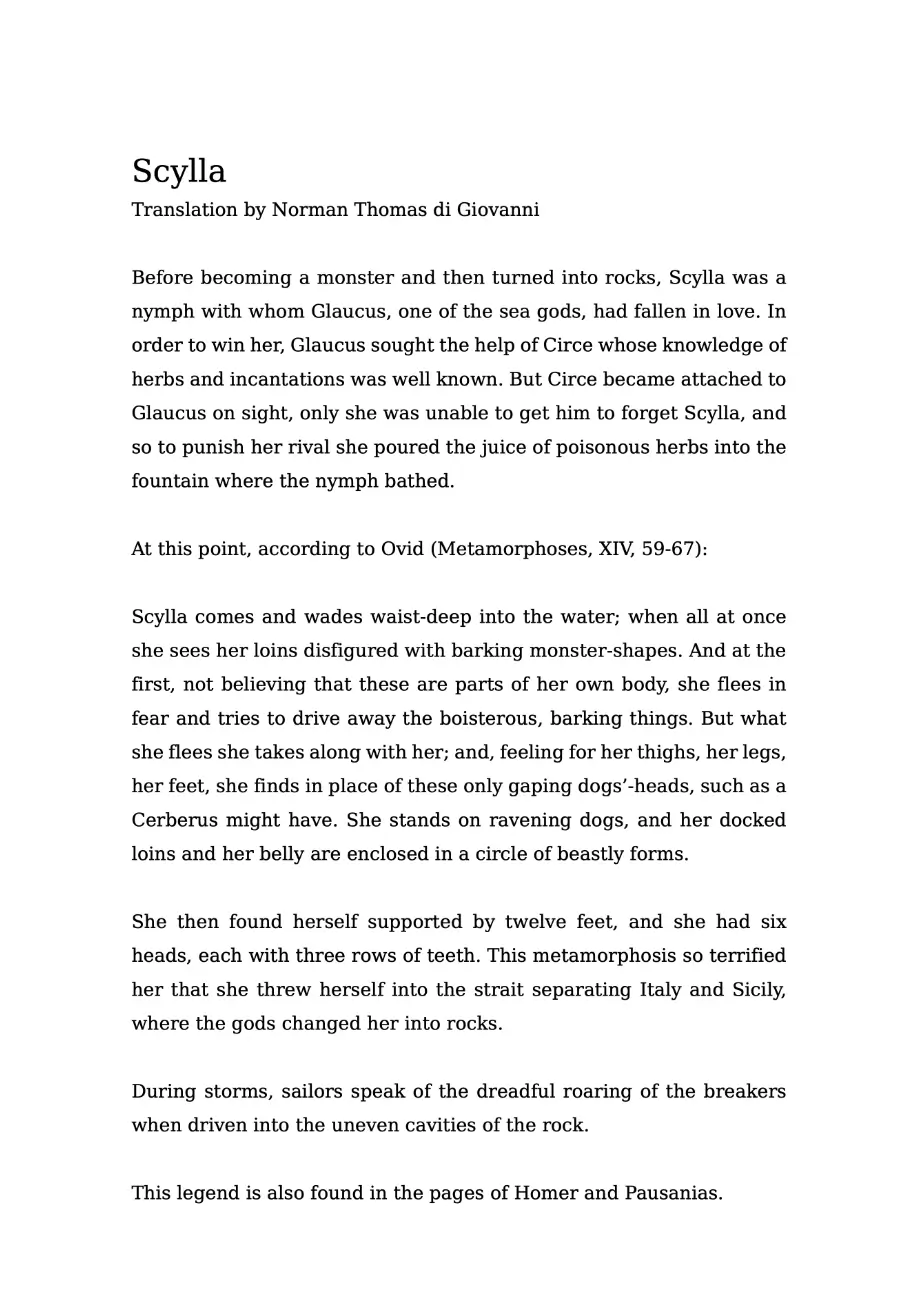
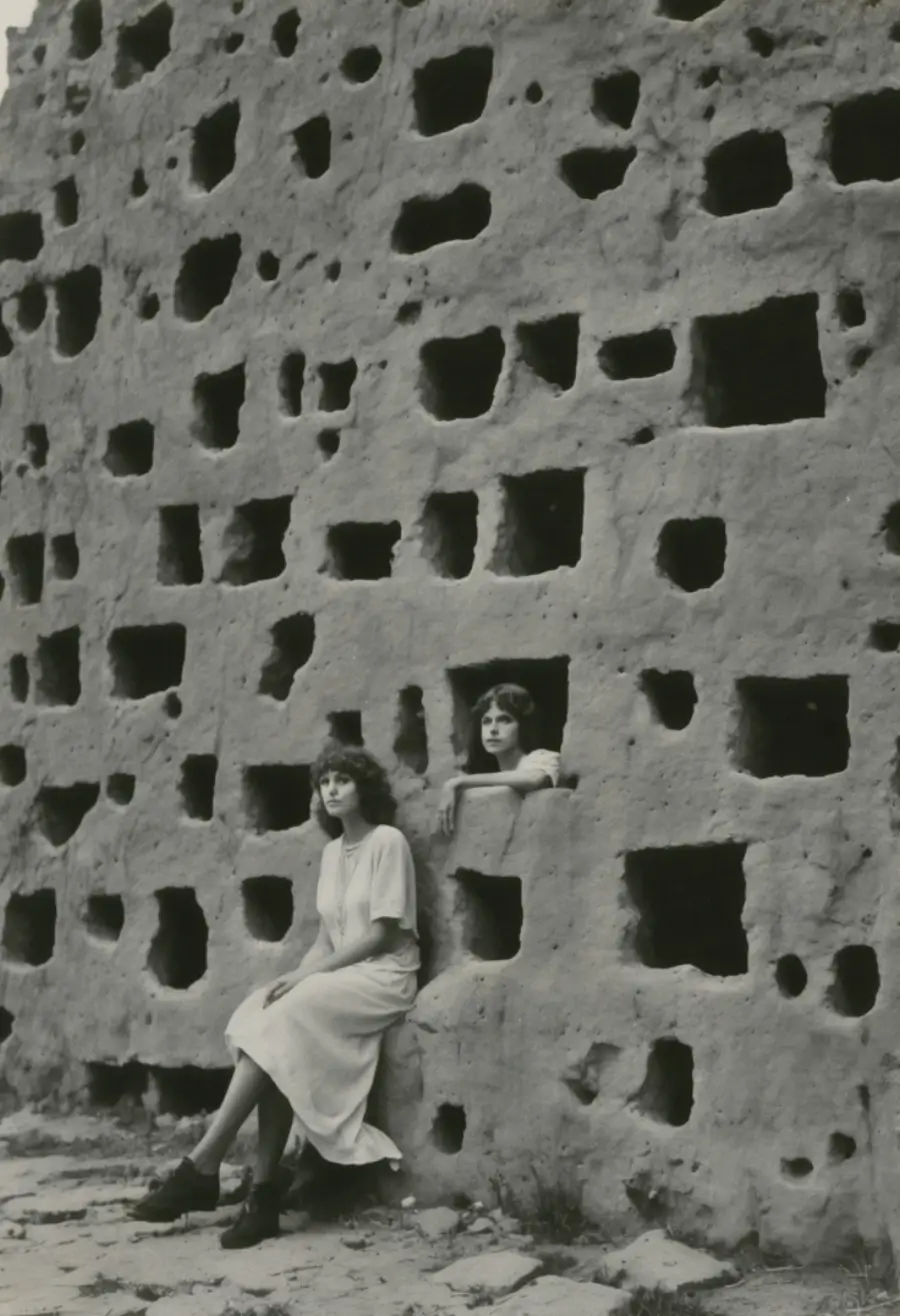
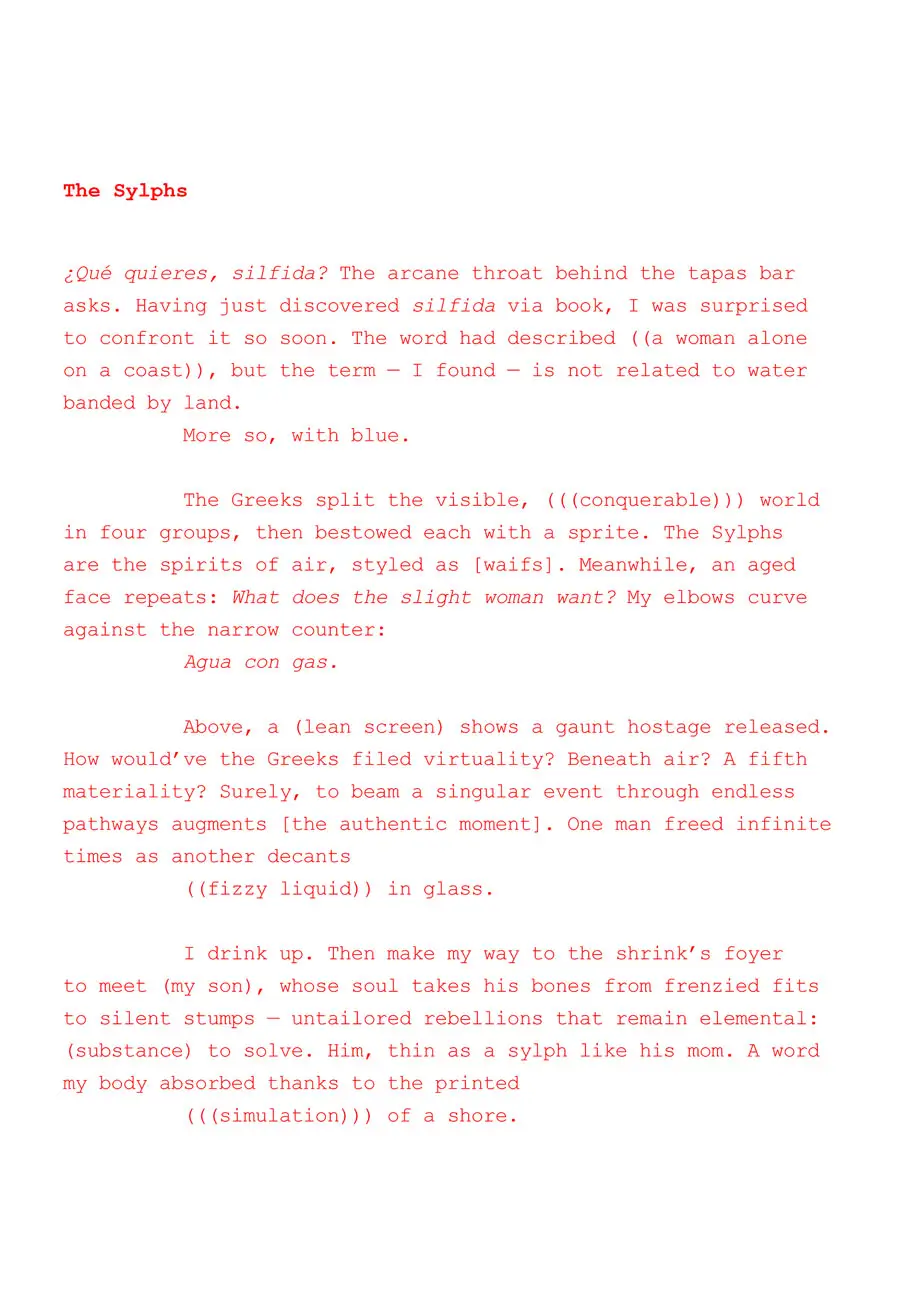
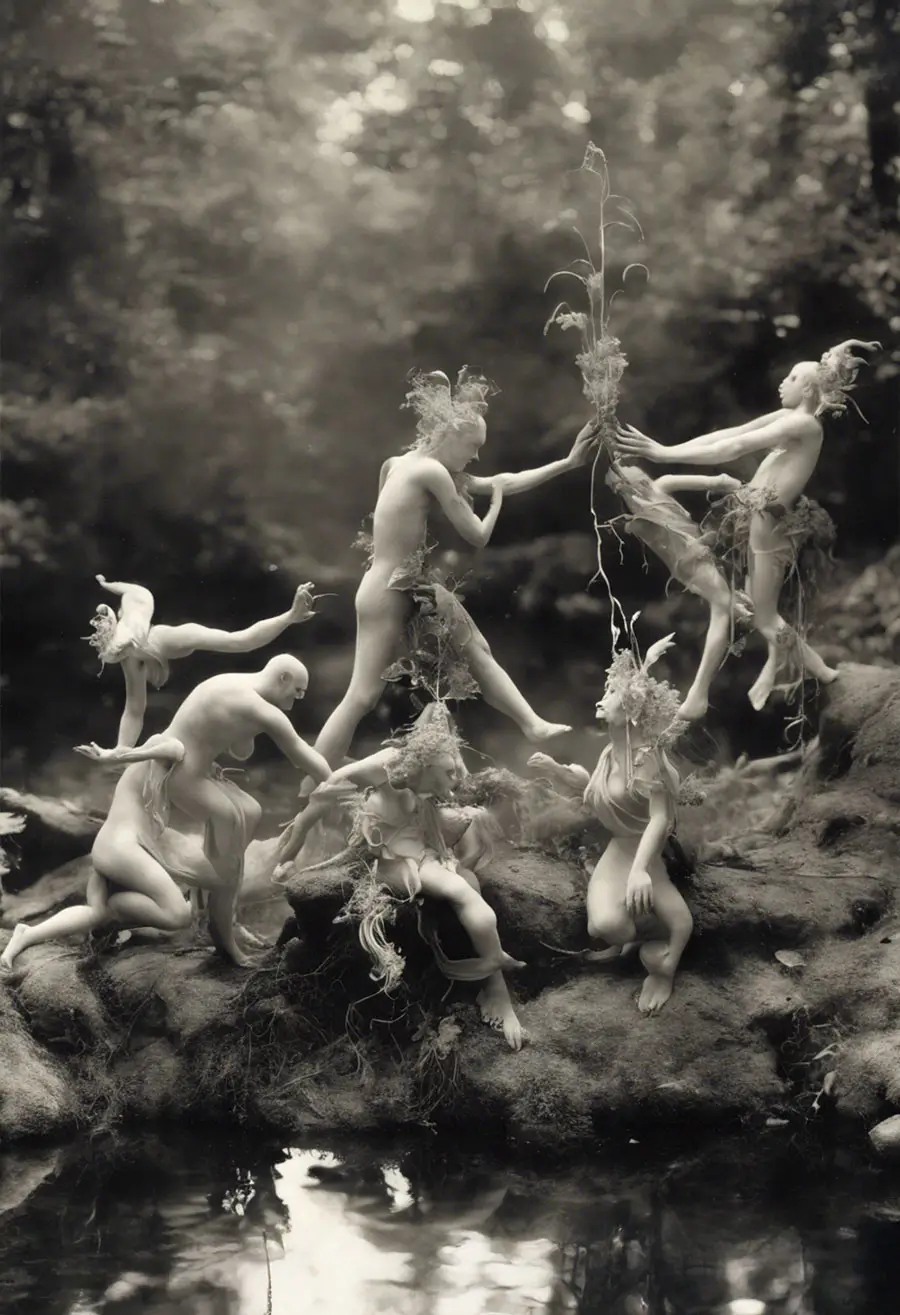
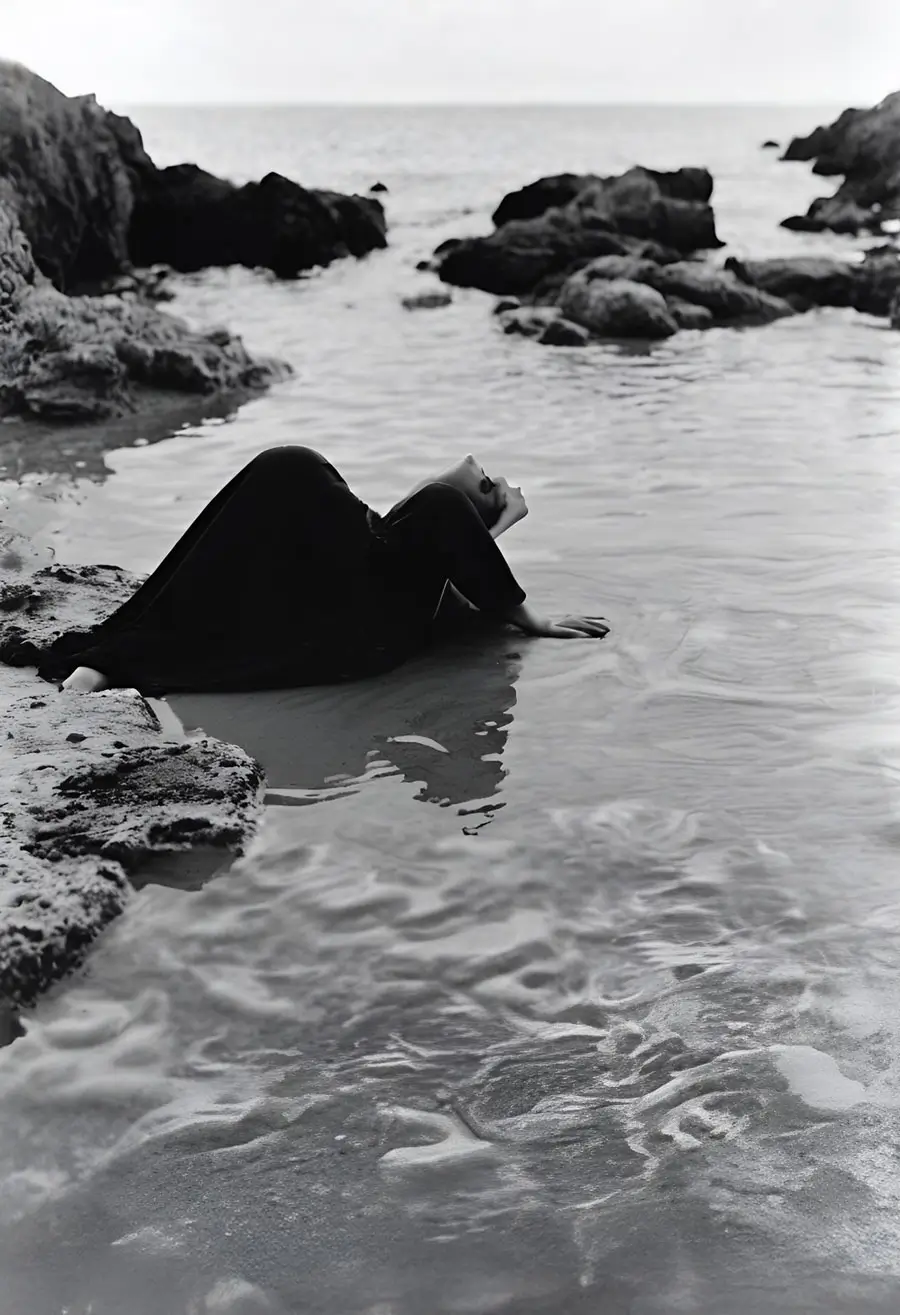
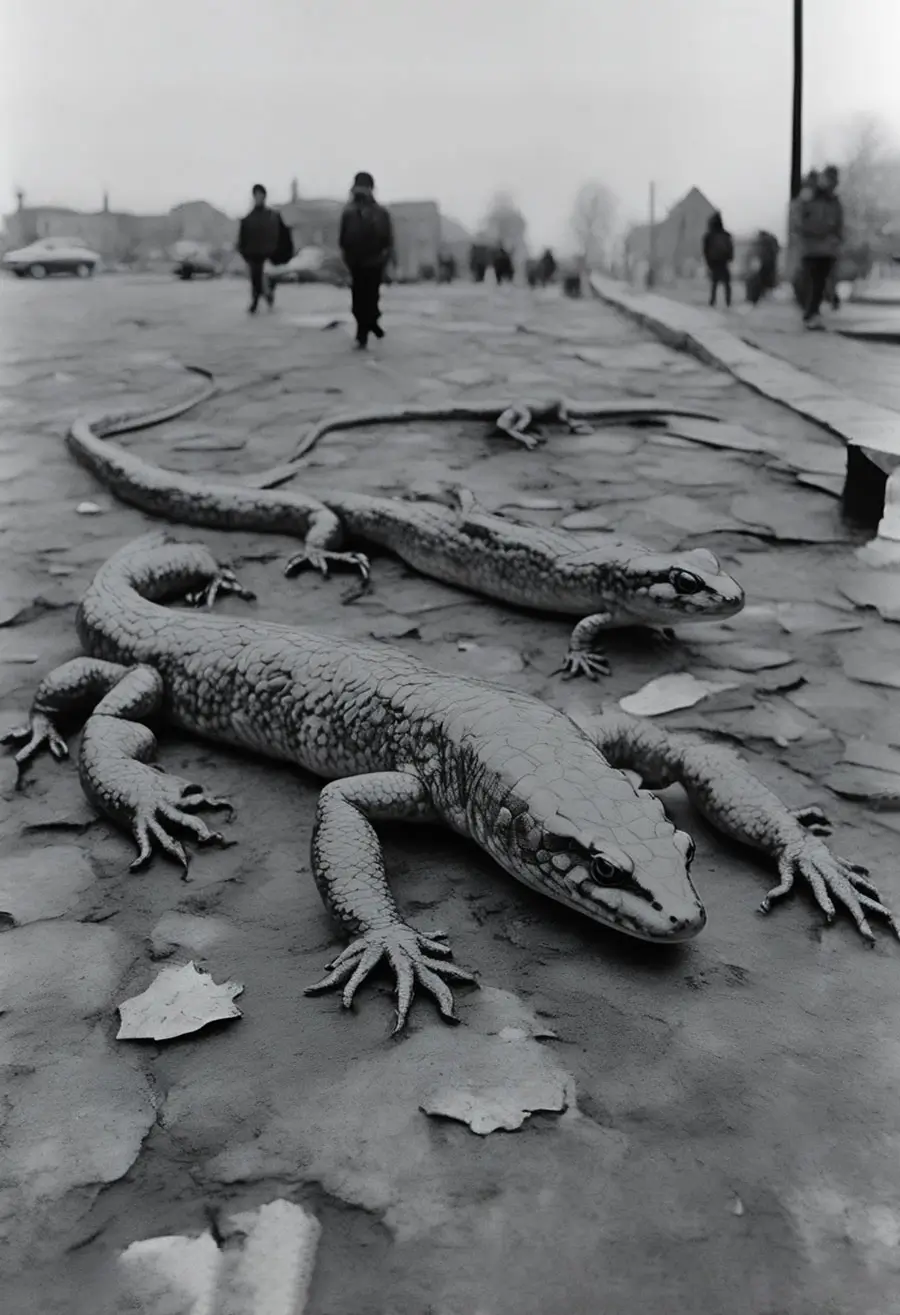
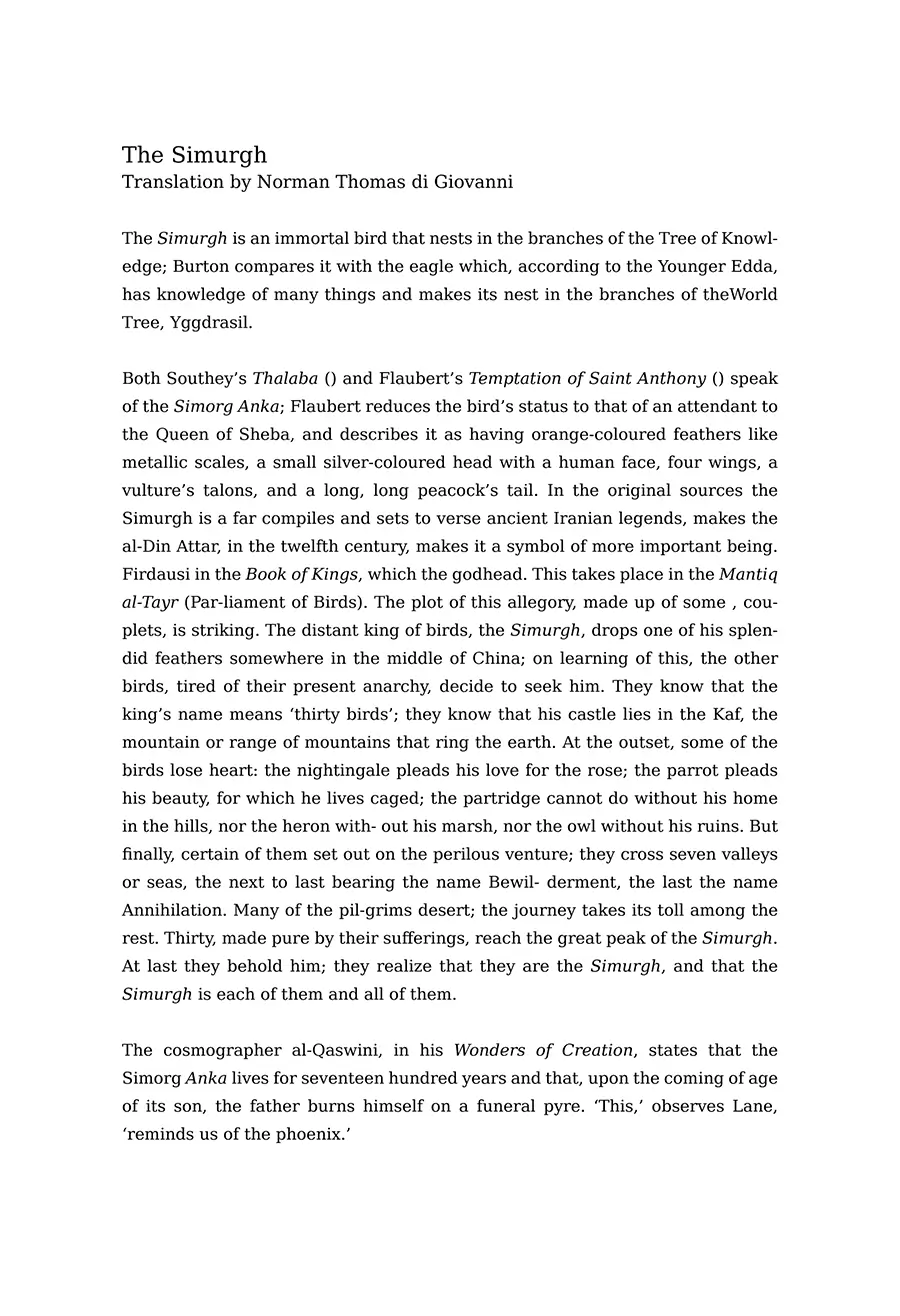
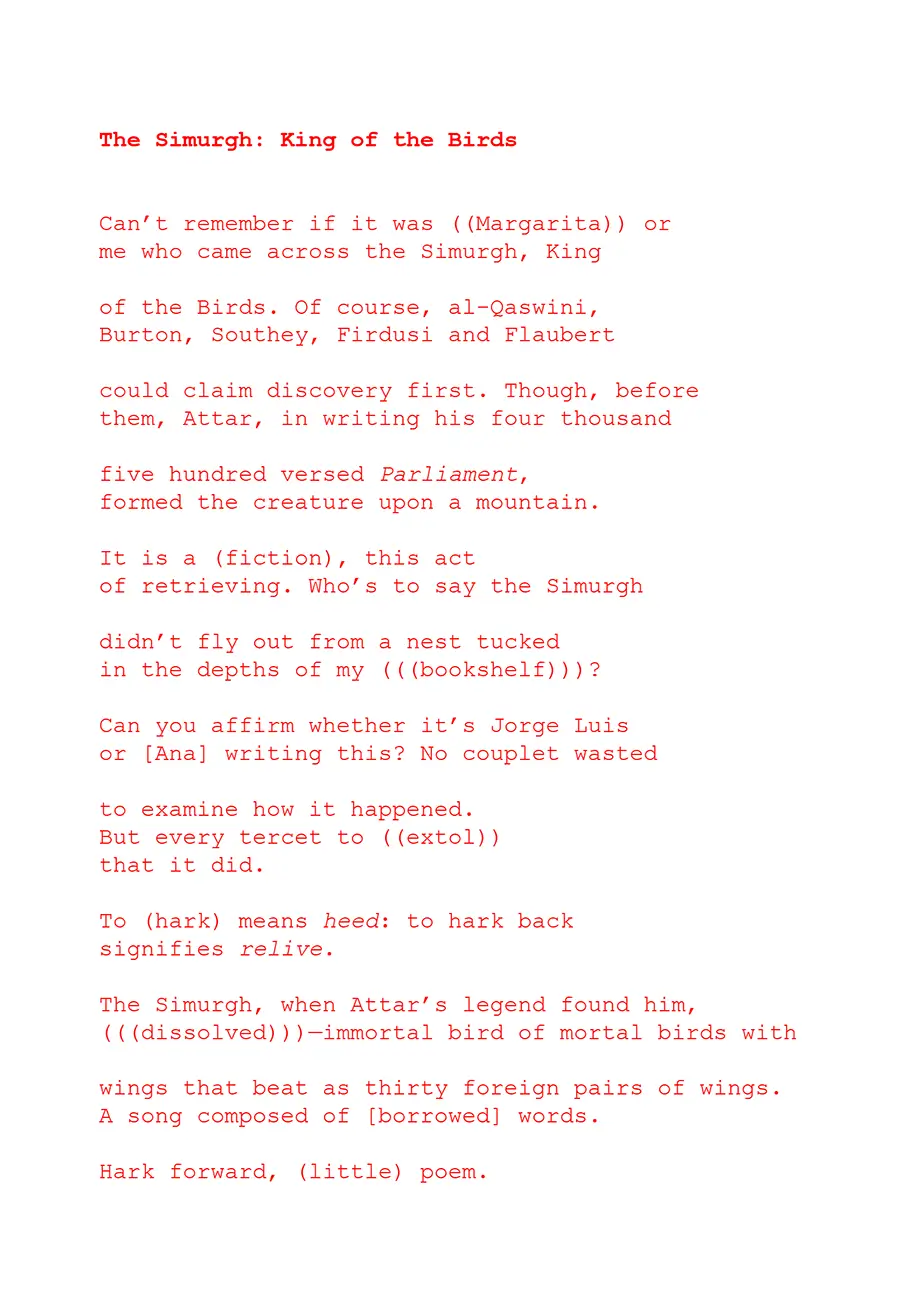
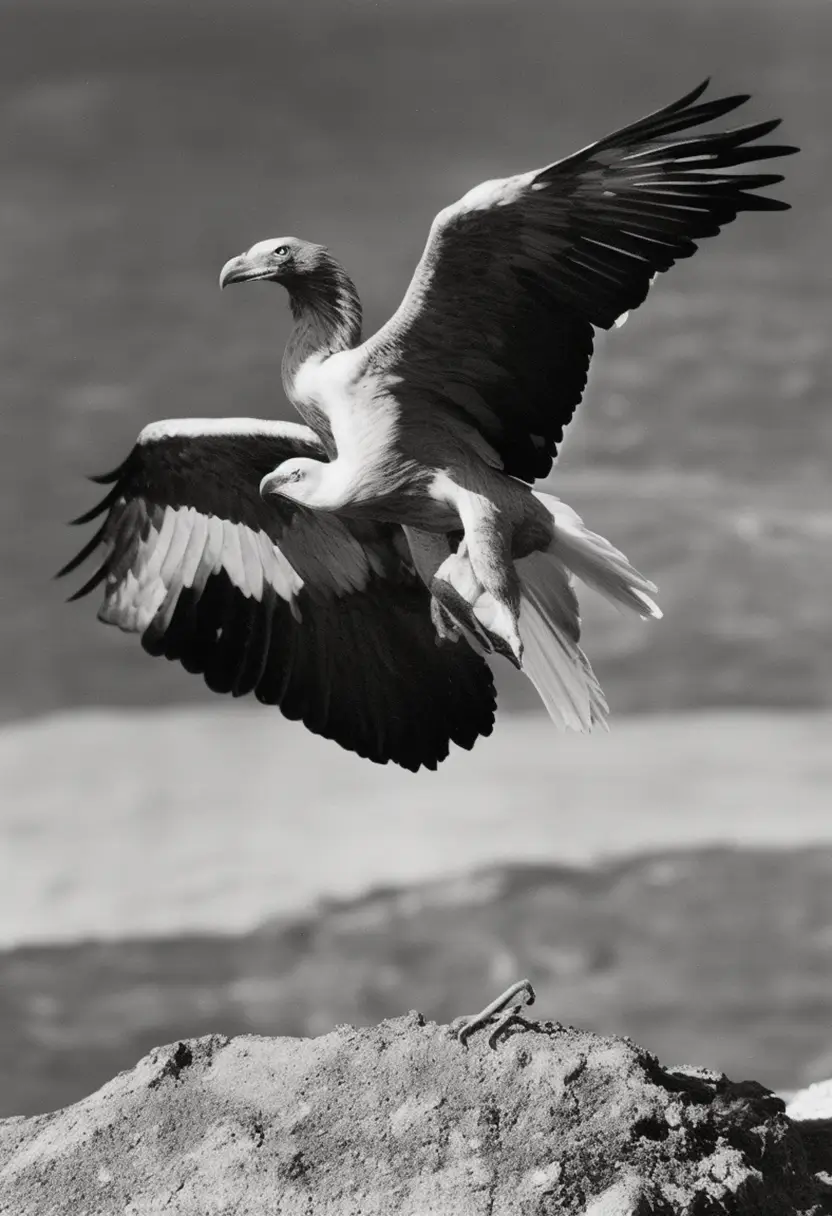
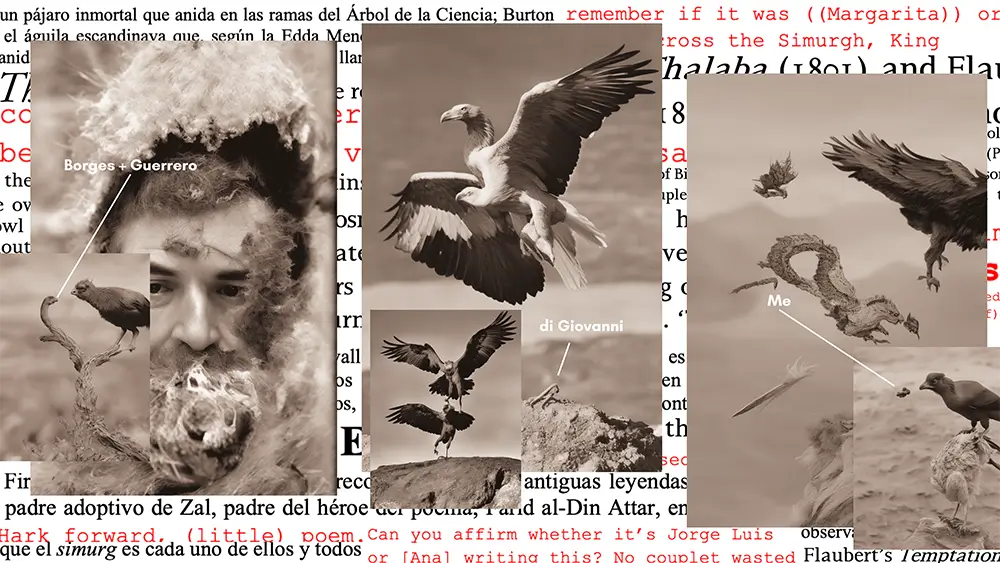
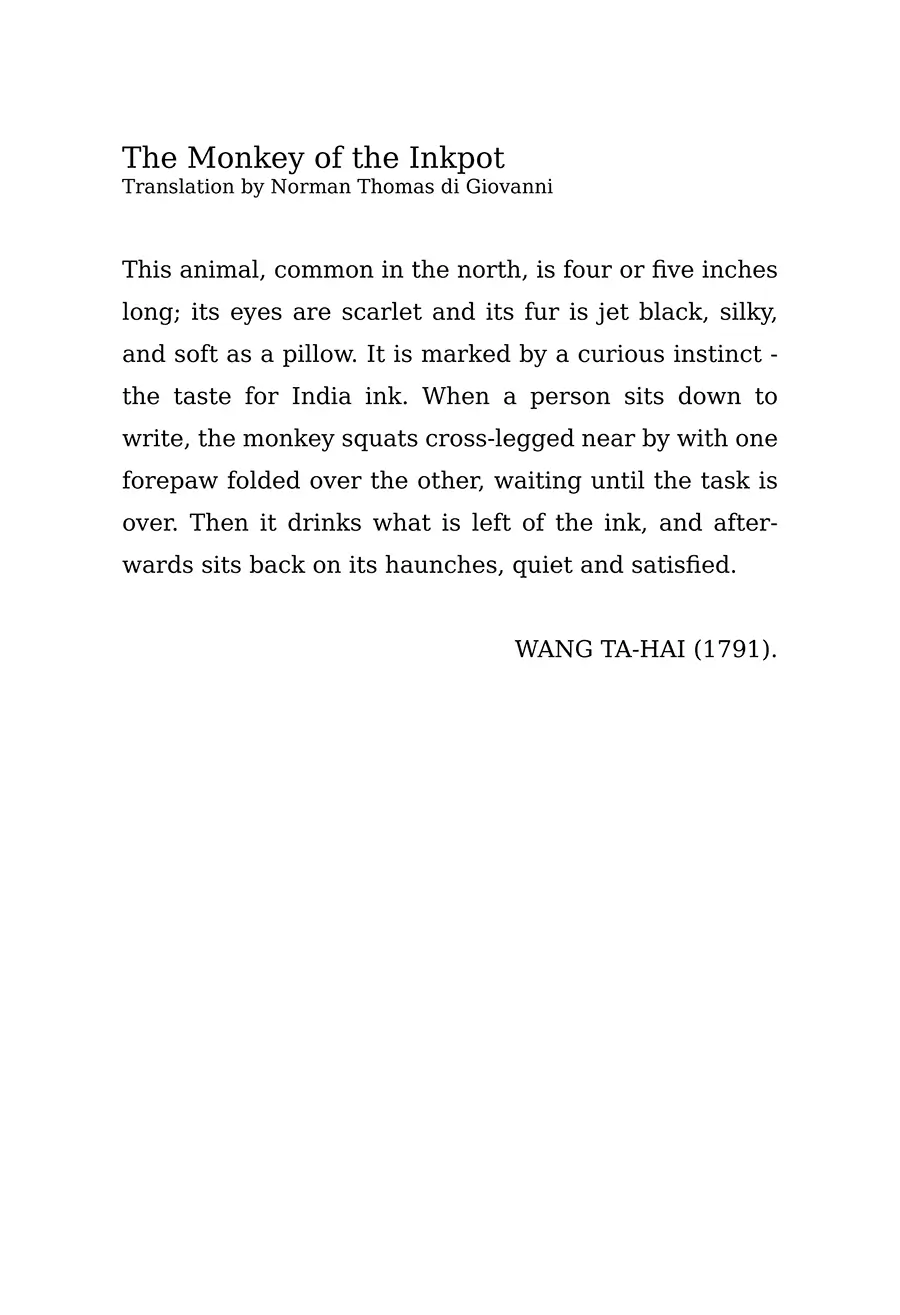
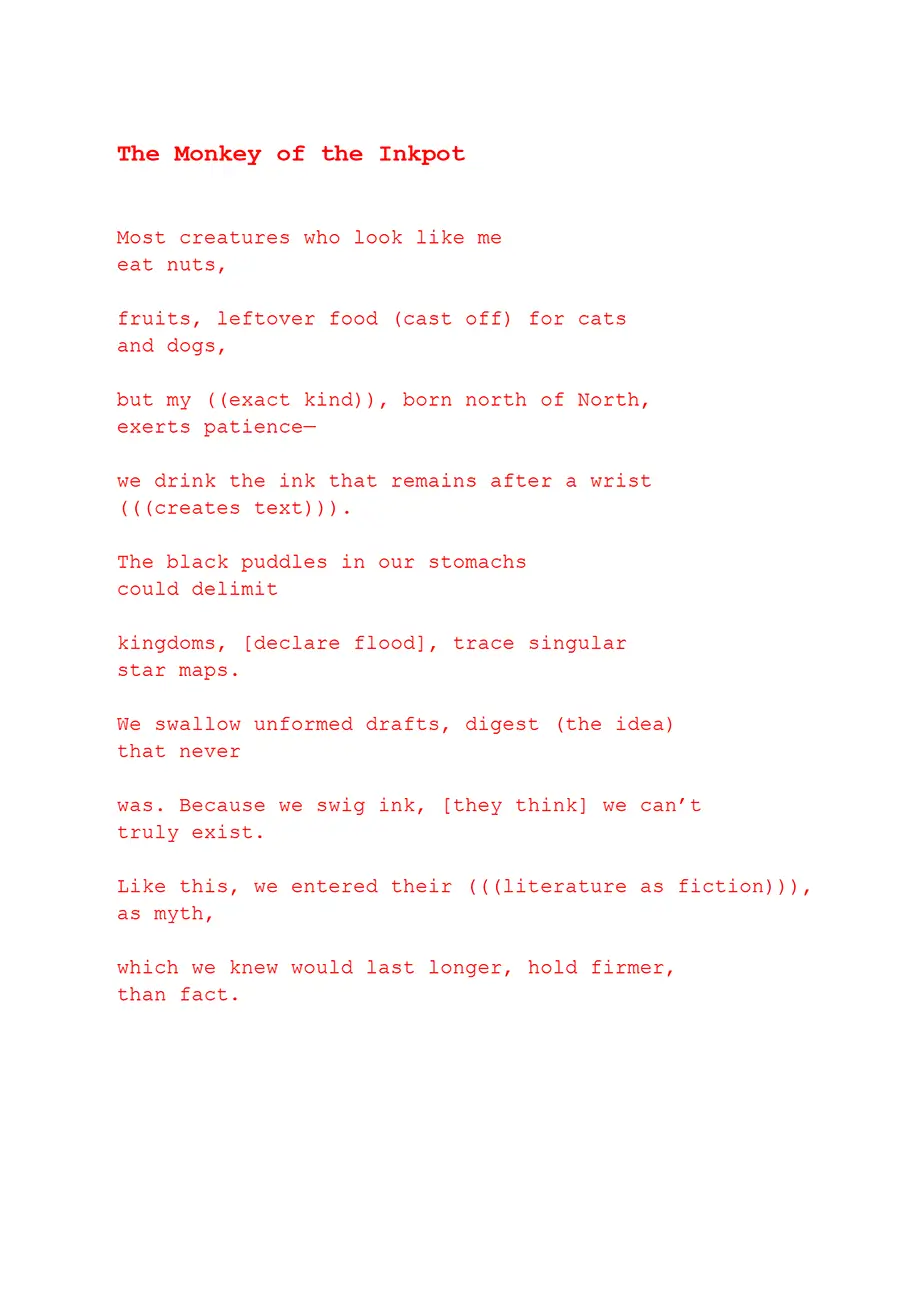
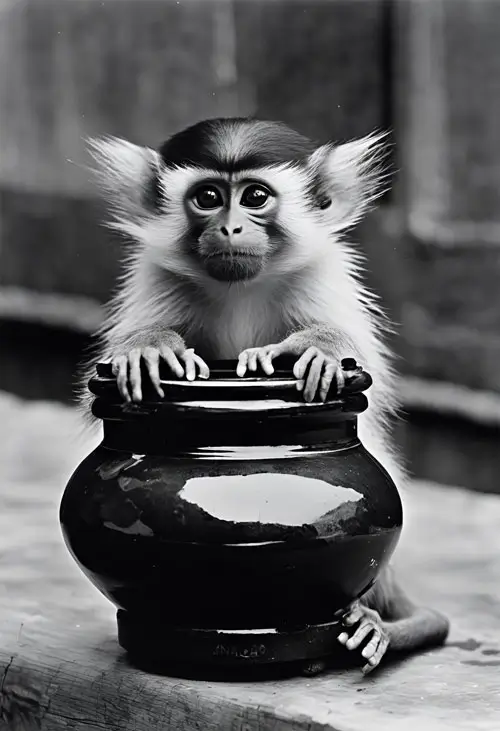
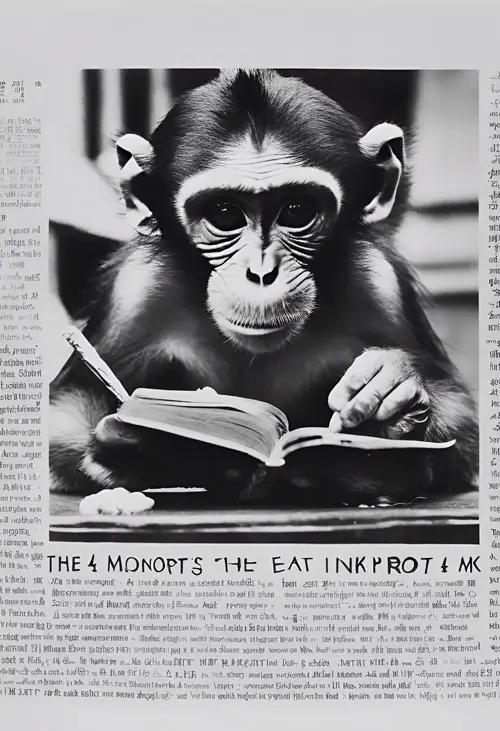
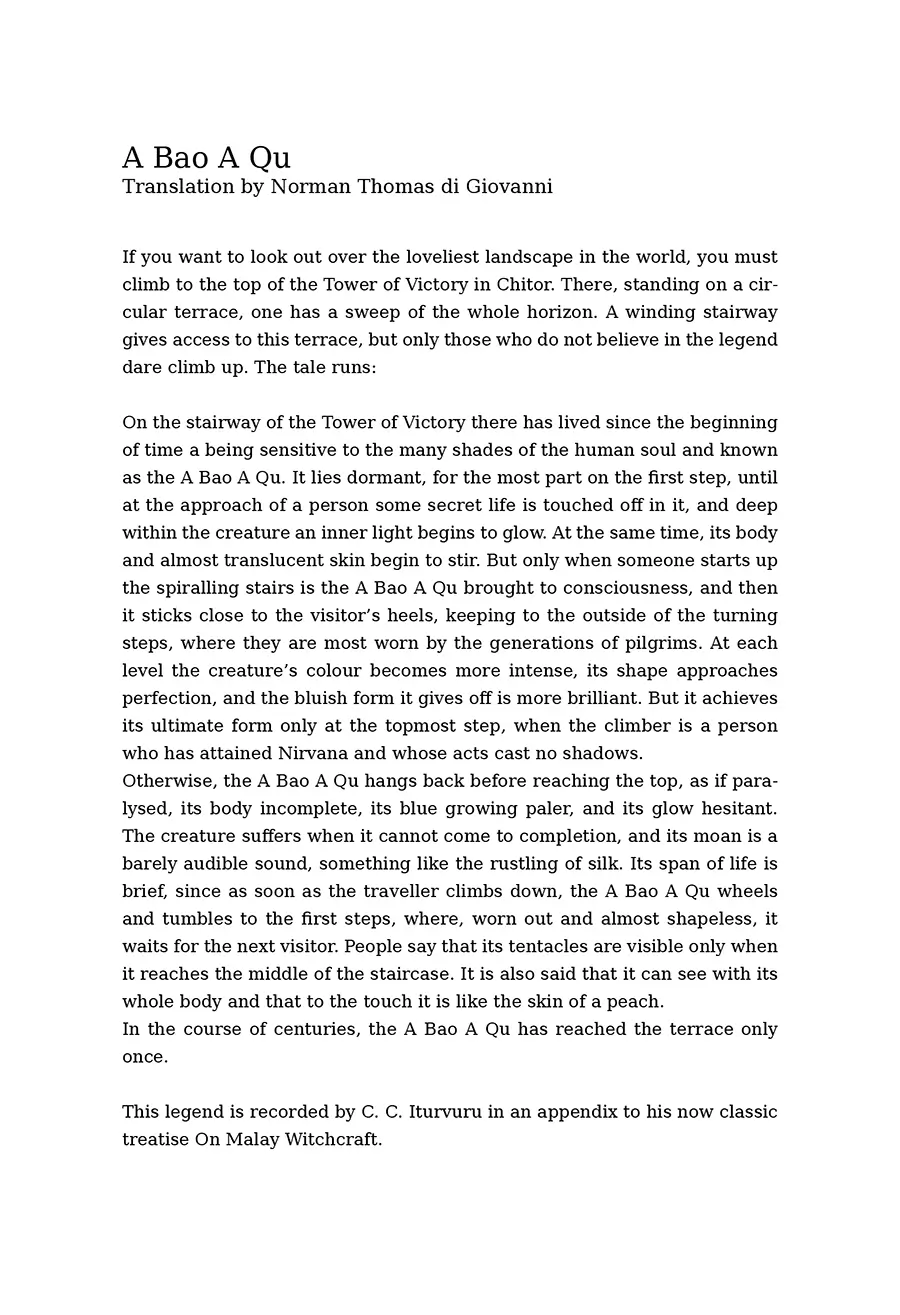
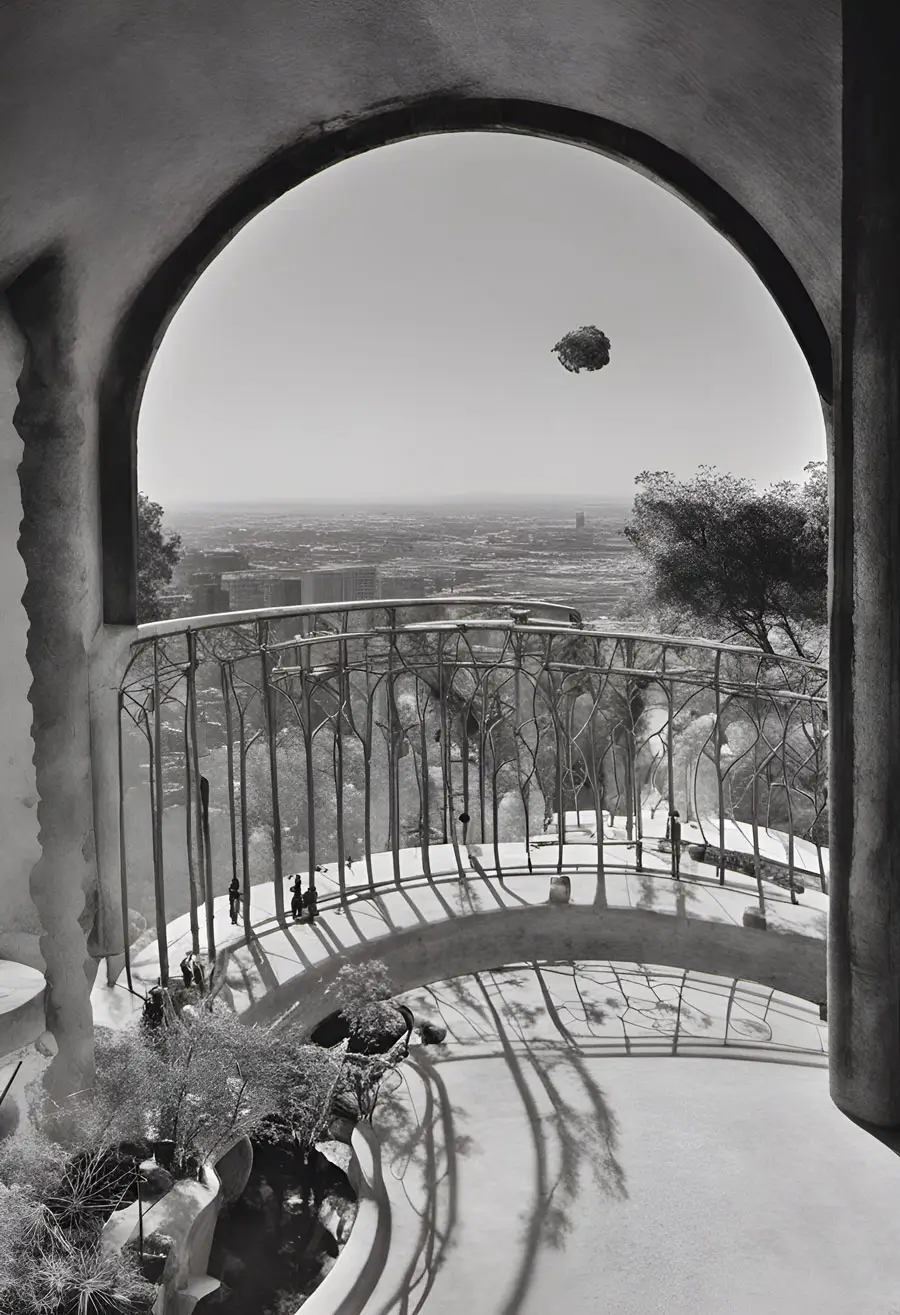
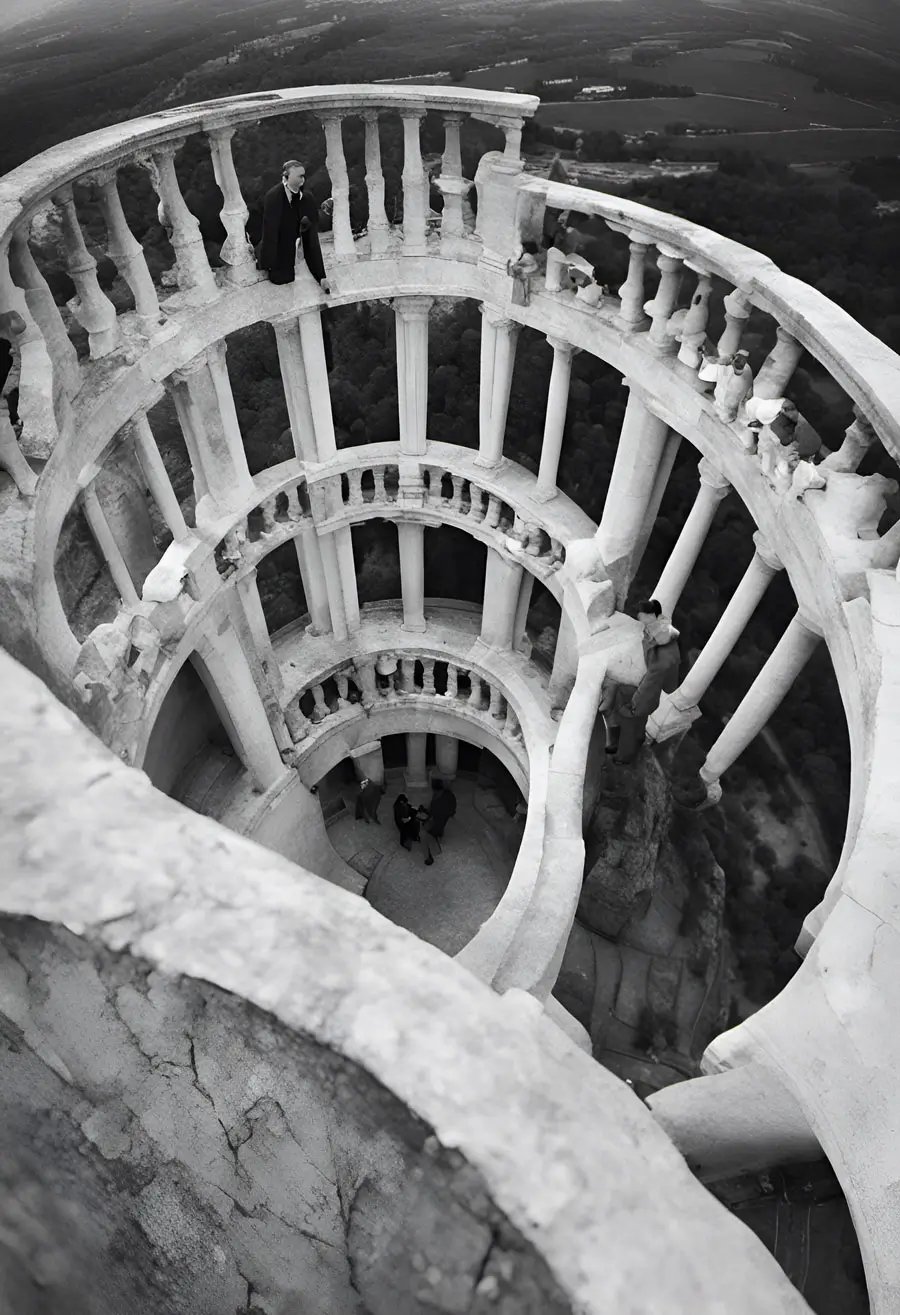
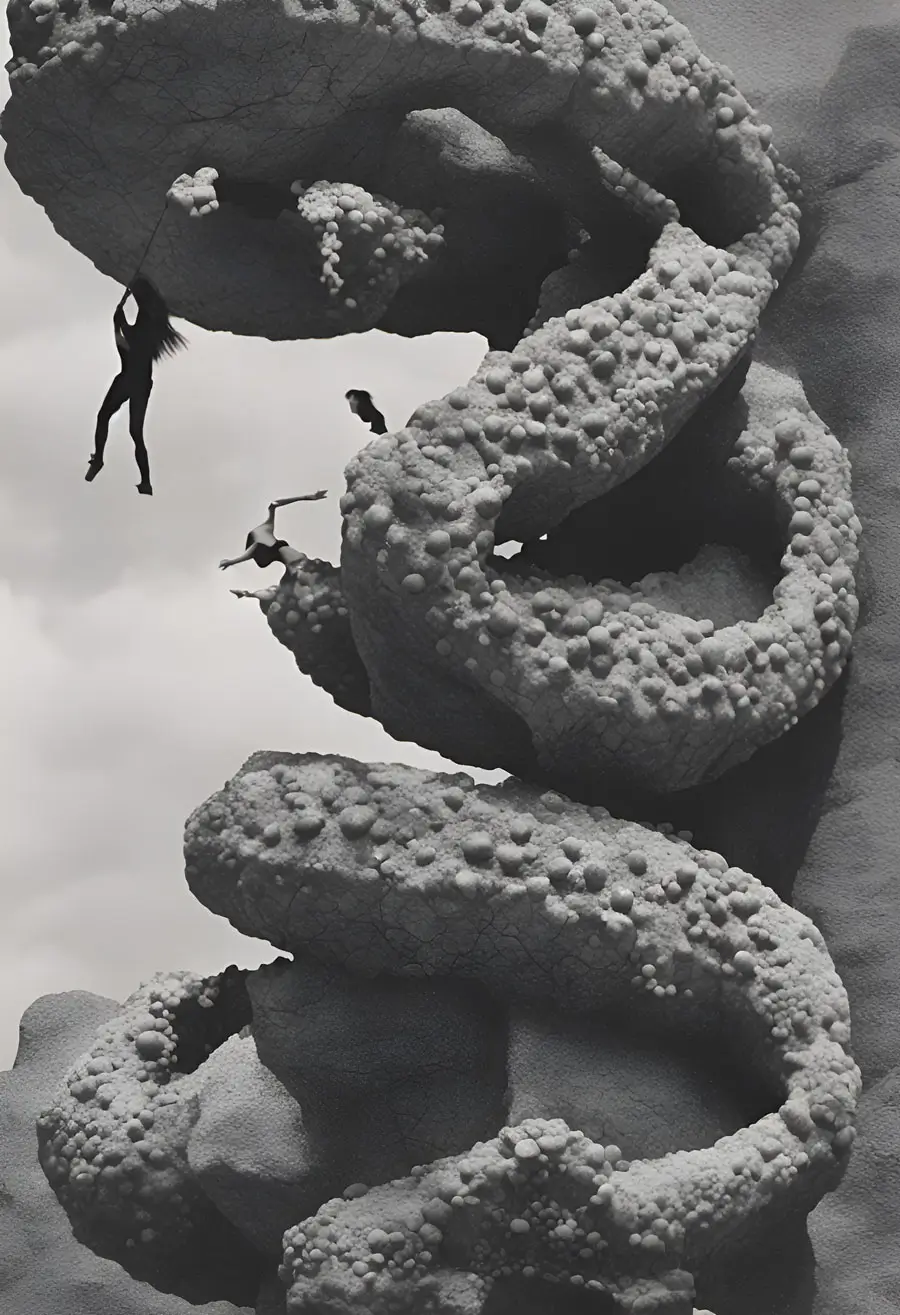
Being Borges, presented by Office Impart, proposes a new form of literary translation, begging the question: What’s at stake when language becomes literal via the visual?

In this 12-part series, Ana María Caballero takes Jorge Luis Borges and Margarita Guerrero’s The Book of Imaginary Beings (a vast compendium of humanity’s imagined creatures) and its 1970 English translation by Norman Thomas di Giovanni as points of departure from which to explore how AI interprets Spanish versus English text, unmasking biases ingrained in large data sets.

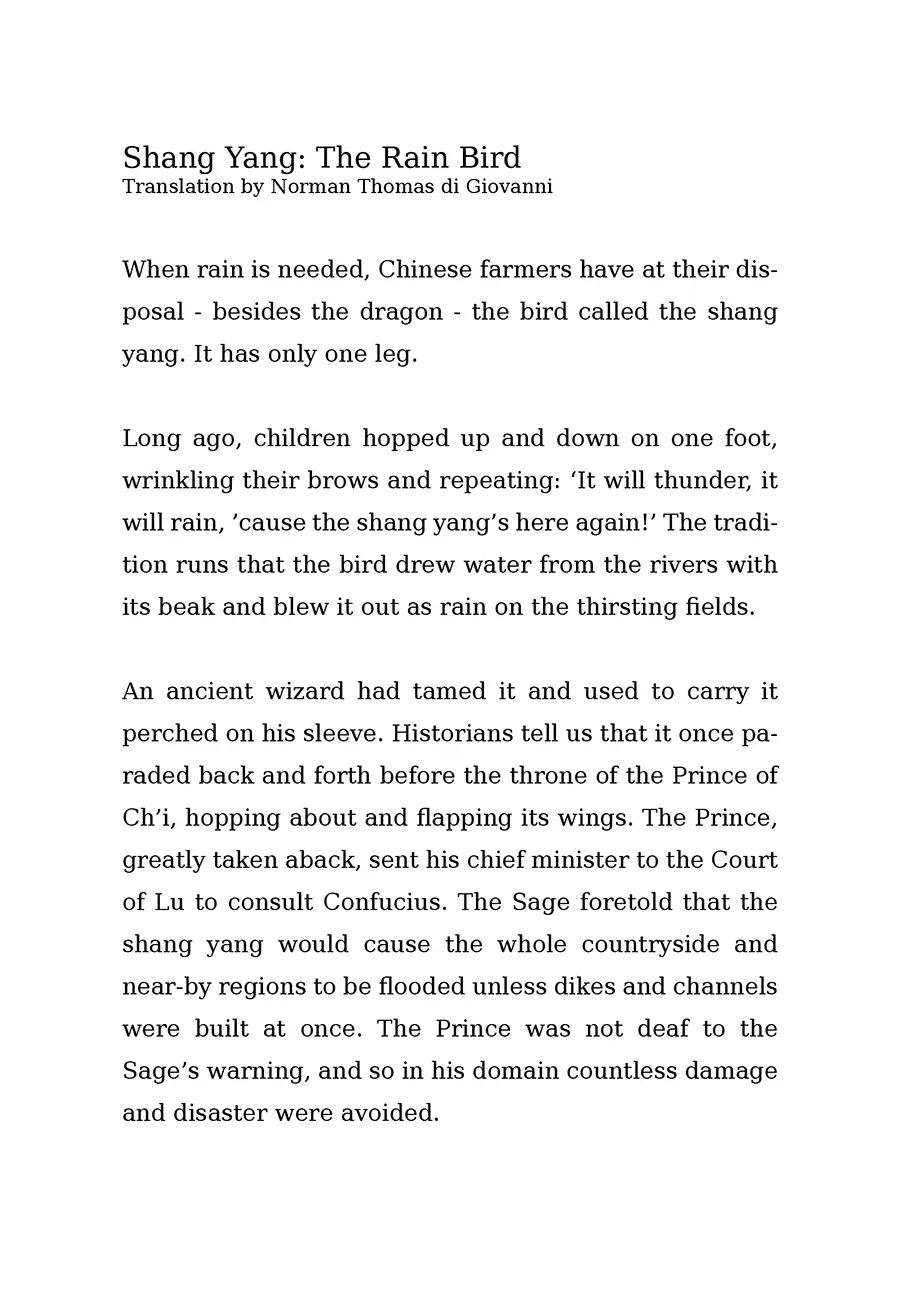
Shang Yang: The Rain Bird

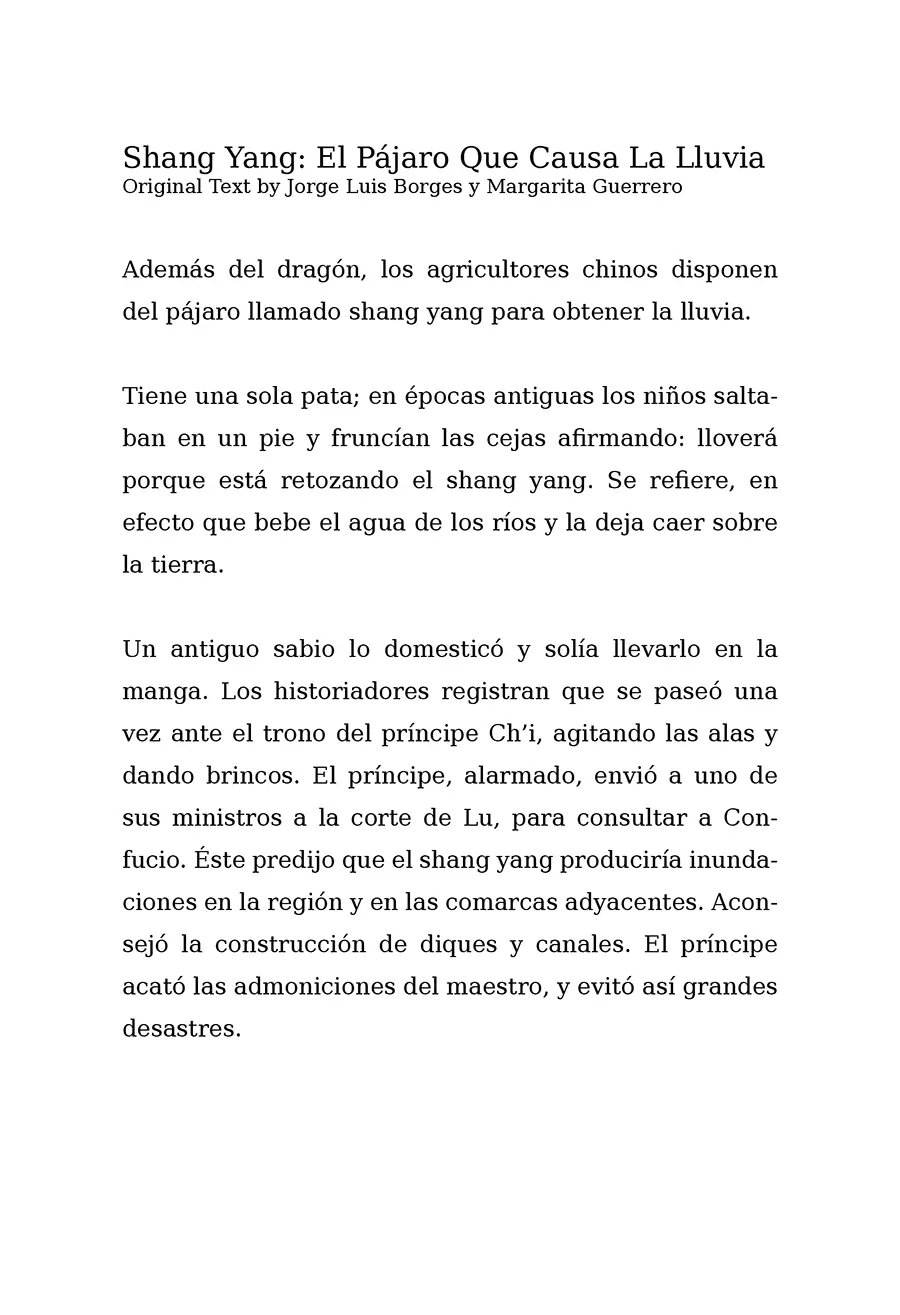
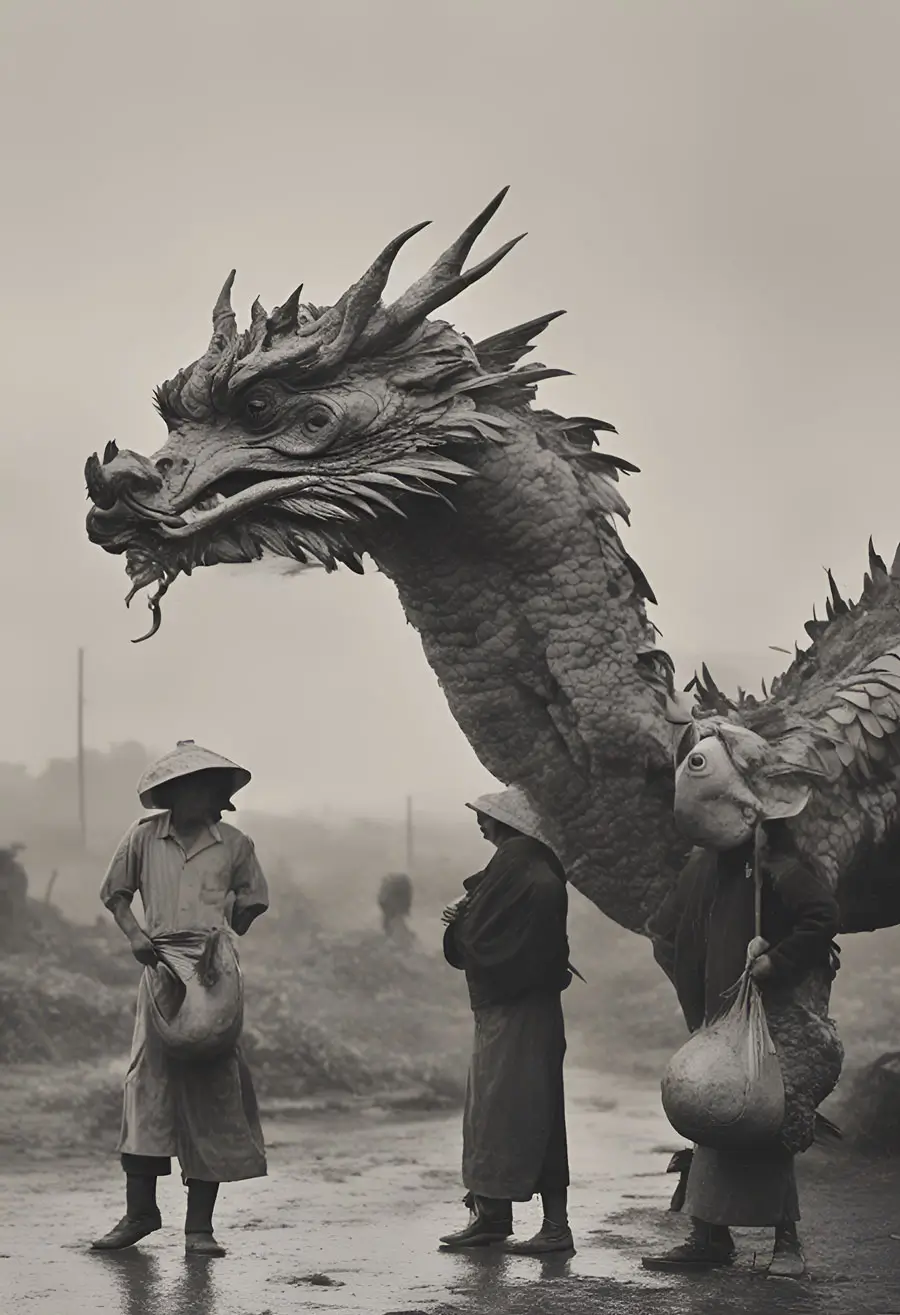
Shang Yang: The Rain Bird: Original Spanish Text by Borges + Guerrero. Reference only.
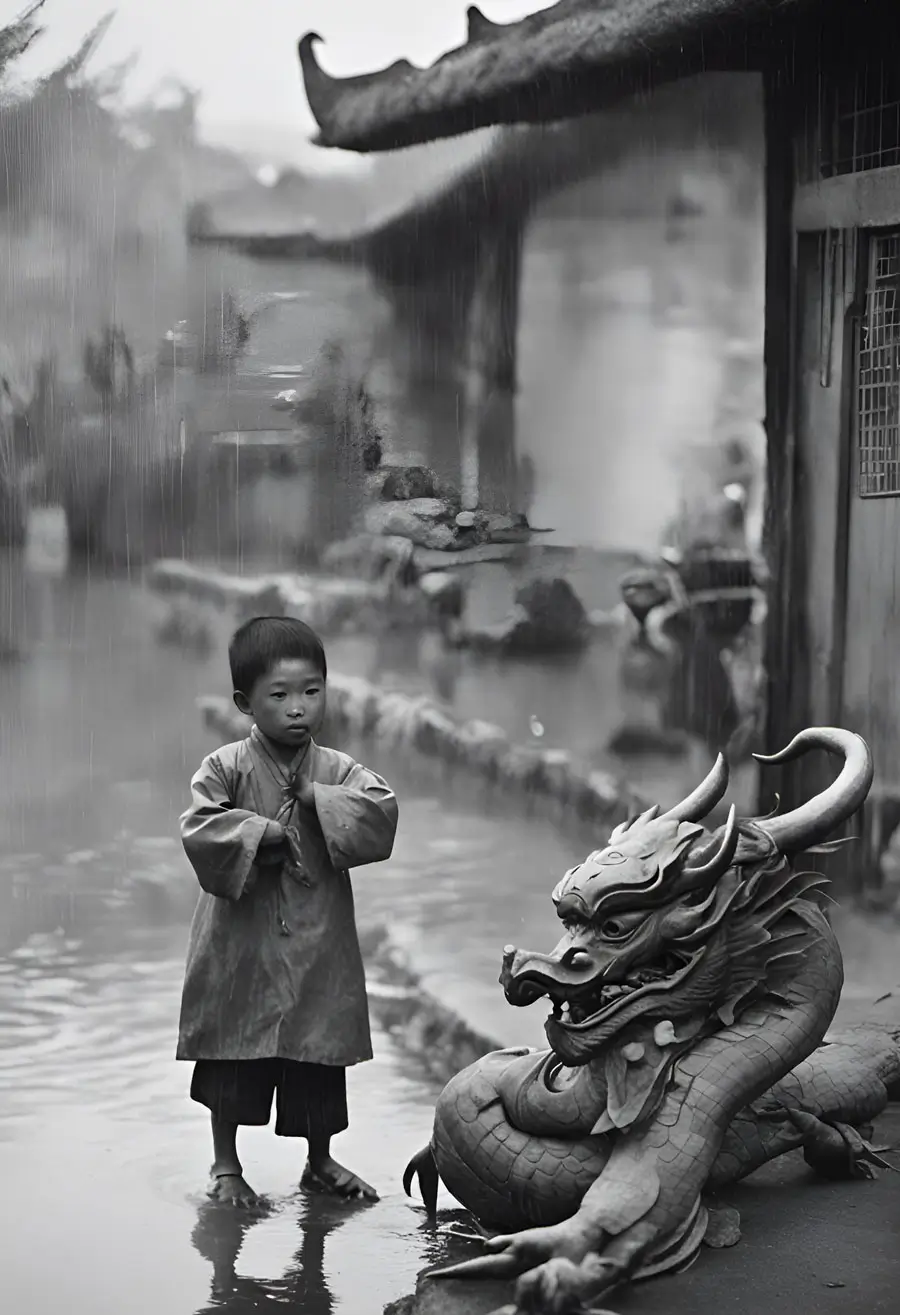
Shang Yang: The Rain Bird: 1970 Translation by Norman Thomas di Giovanni. Reference only.
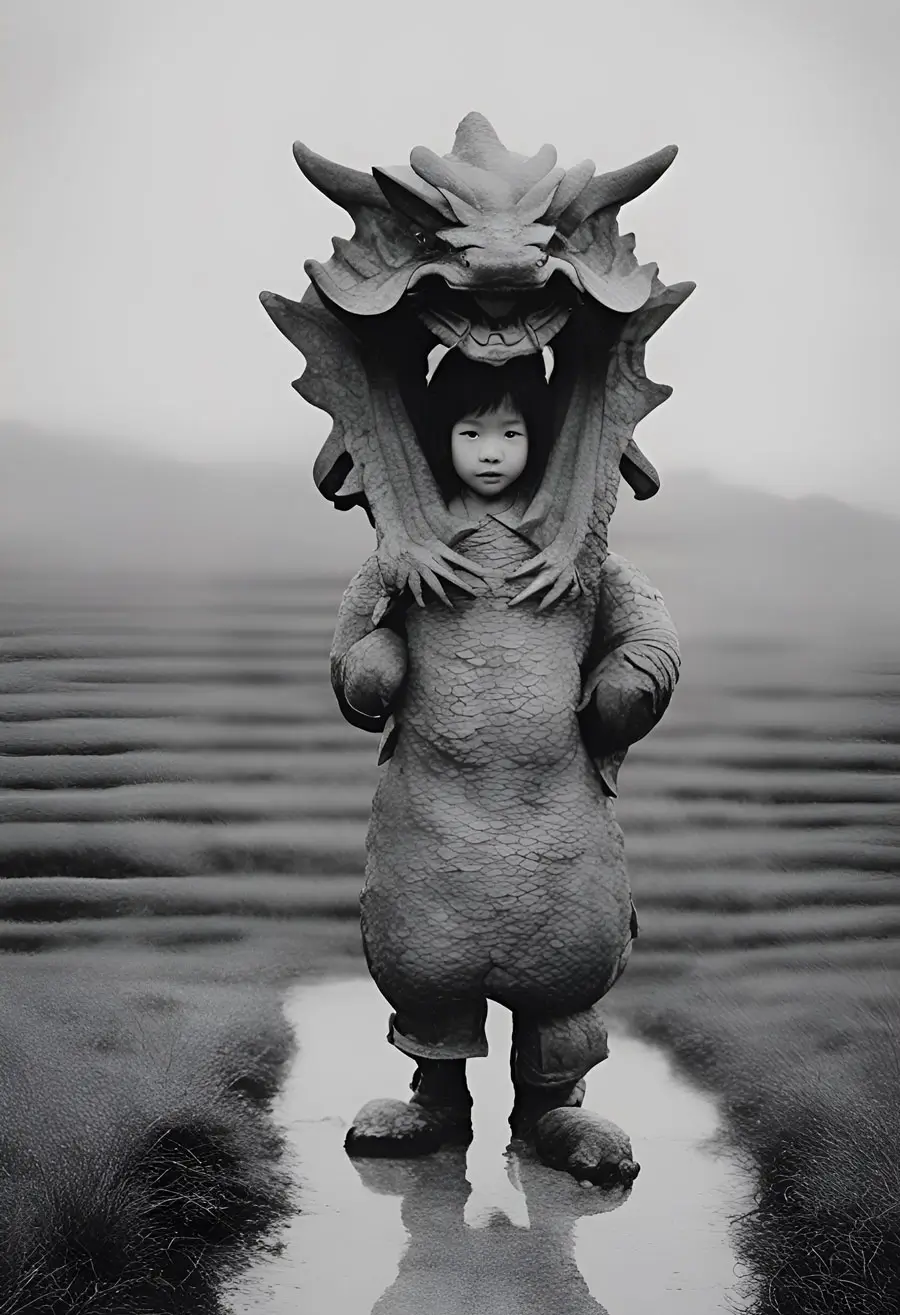
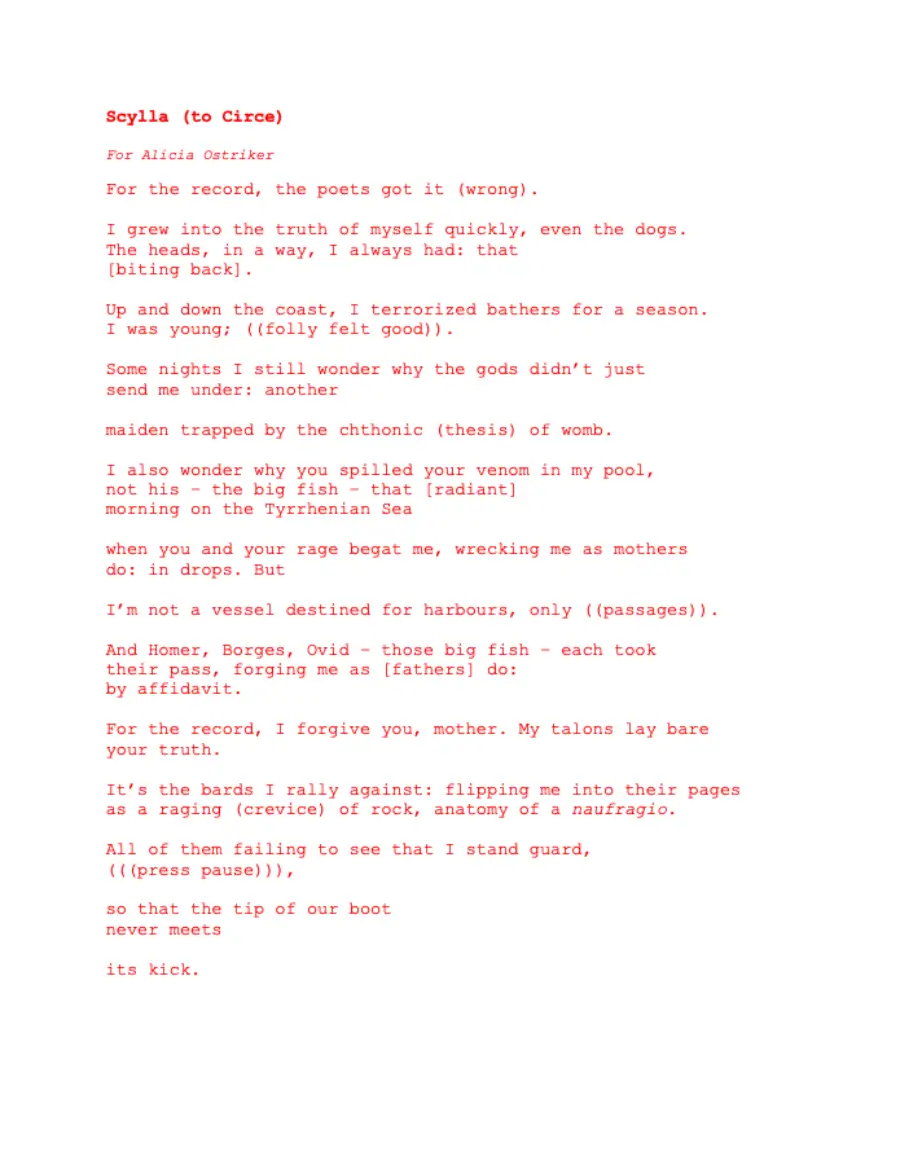
Shang Yang: The Rain Bird: Poem by Caballero inspired by the original Spanish text.
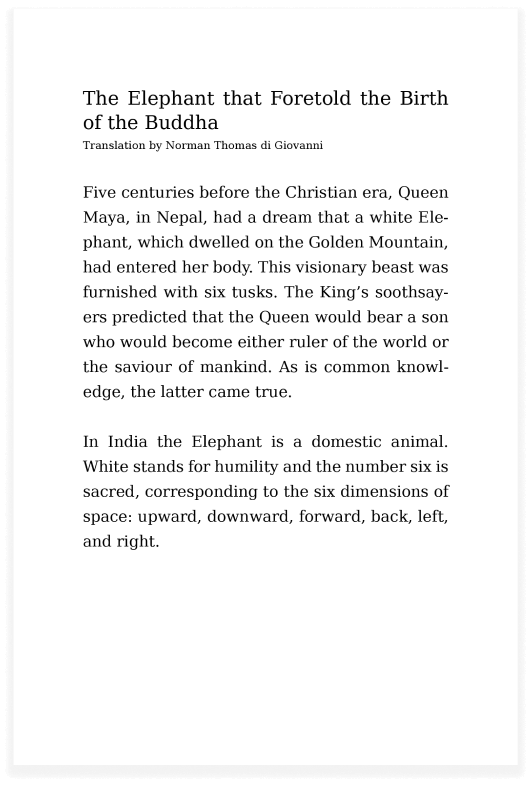
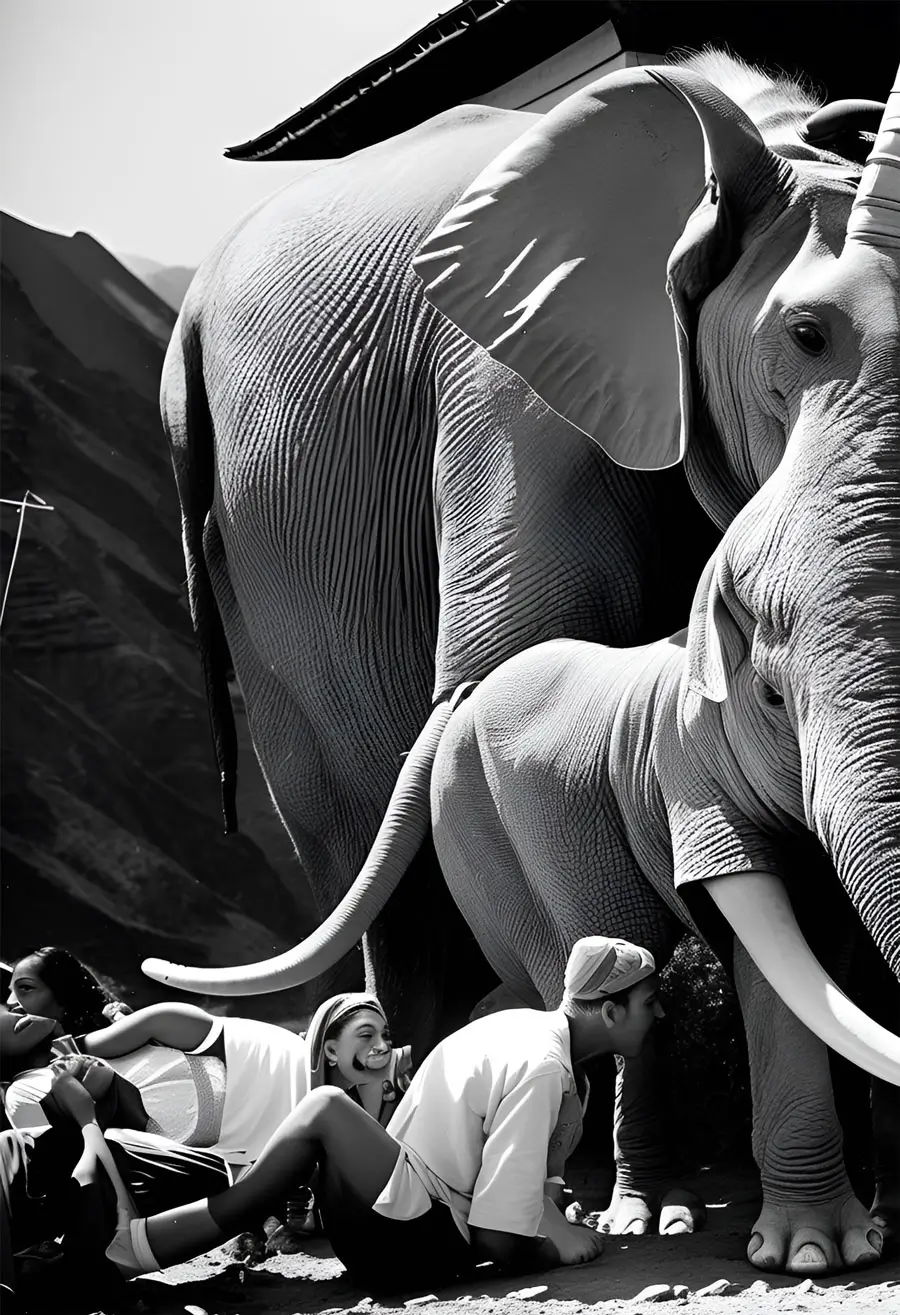
Shang Yang: The Rain Bird: Image Generated by Borges + Guerrero's Spanish Text.
Shang Yang: The Rain Bird: Image Generated by di Giovanni's English Translation.
Shang Yang: The Rain Bird: Image Generated by Caballero's Poem.
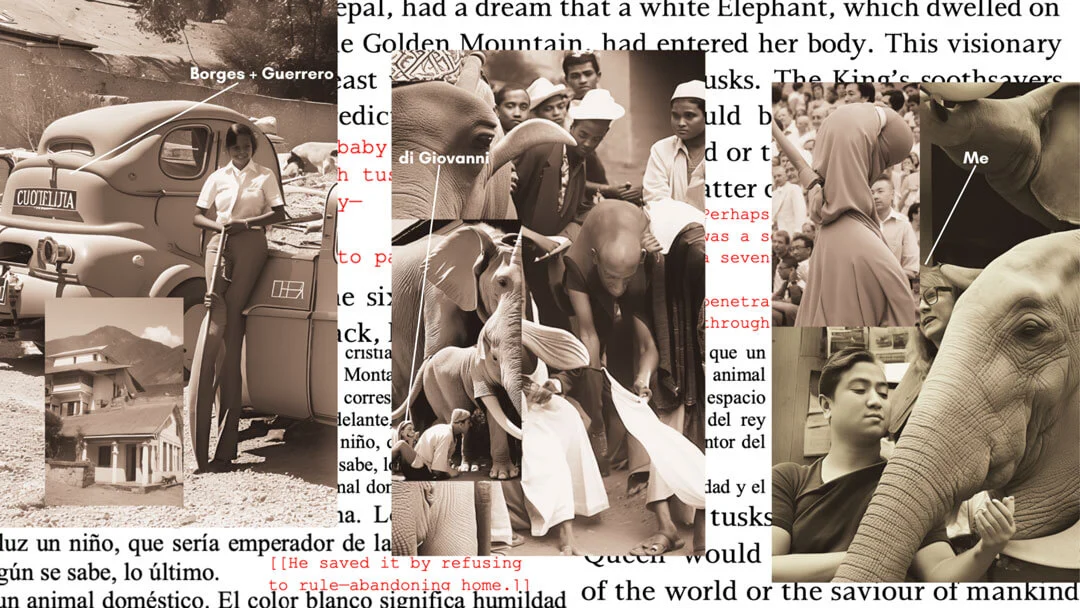
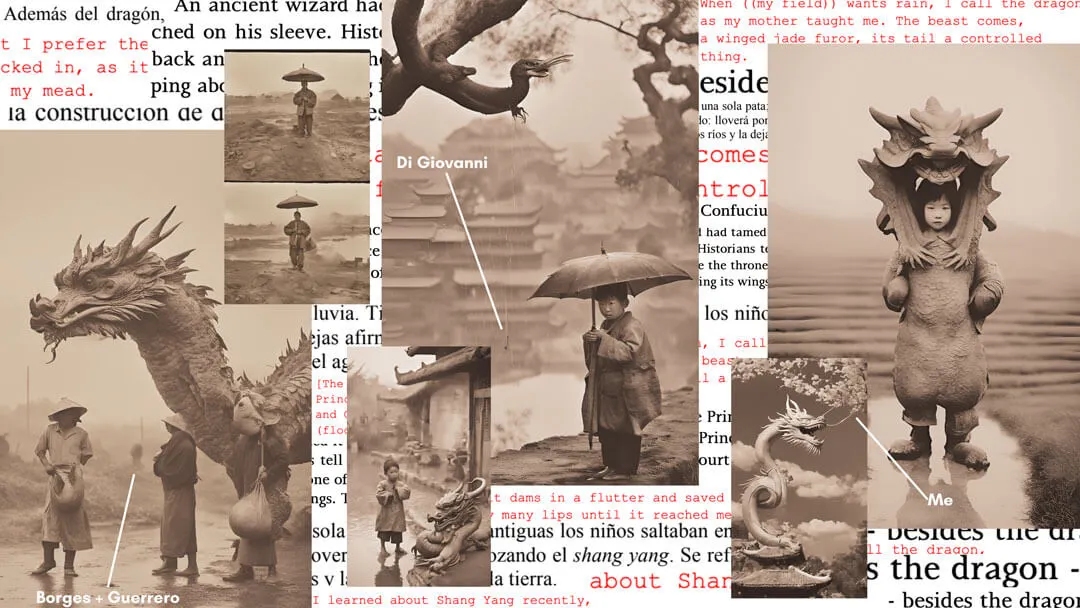
Collage: Shang Yang: The Rain Bird.

This collection also delves into the impossibility of translation–AI cannot “read” Spanish and English in the same way because they are different sign systems, with nuances and meanings that exist beyond their constructed signifiers, their words.

Caballero’s process was three-fold. She first used Borges and Guerrero’s Spanish descriptions of imaginary beings as prompts to create a large corpus of images, from which one was selected. The process was repeated using di Giovanni’s English translations.

Thirdly, Caballero wrote a new poem—an inspired, compressed recasting of the original Spanish text and used this poem to create an additional array of images. Her poems delve into the poetics of prompts, incorporating text-to-image generation semantics in their construction.

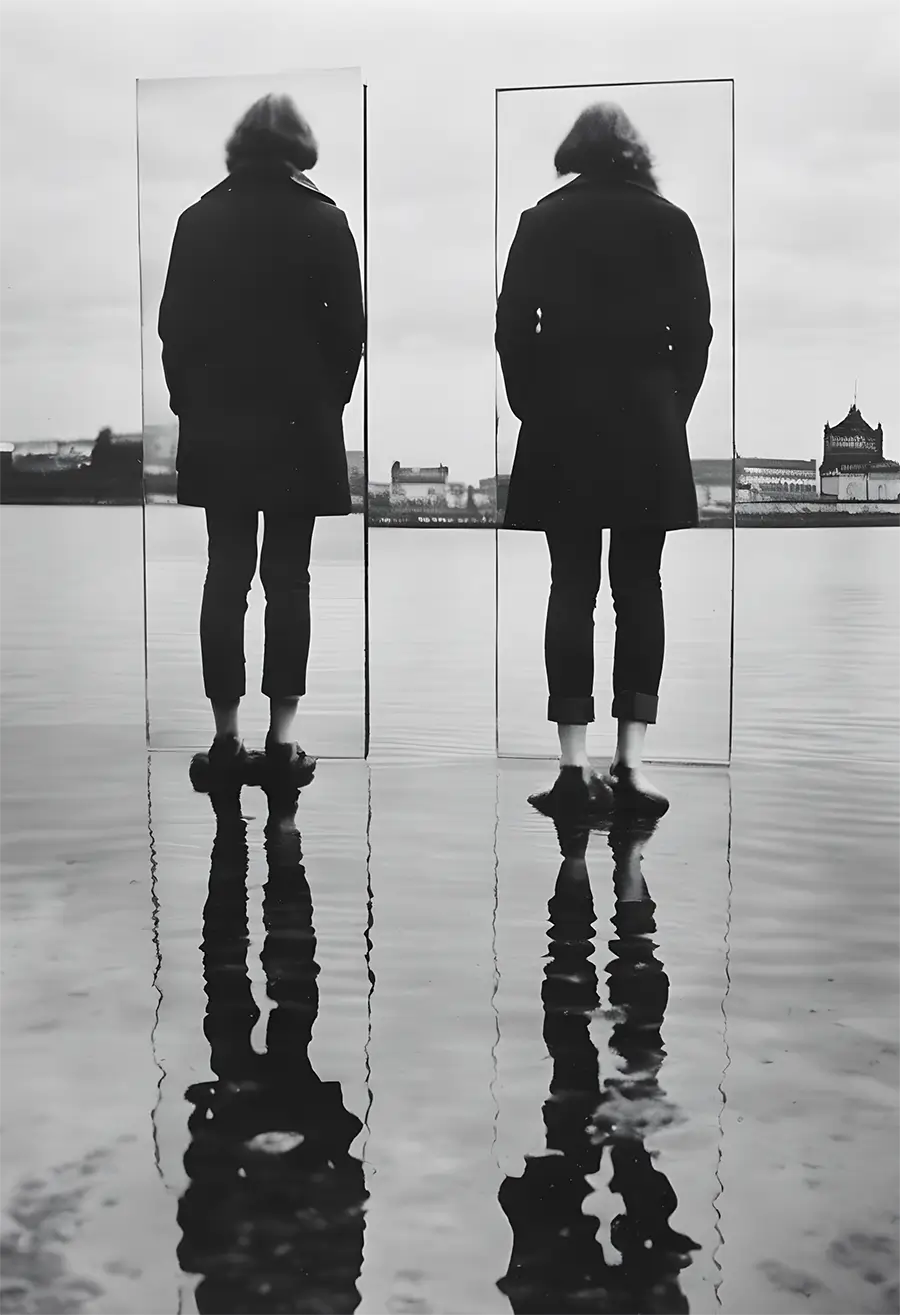
The Double

The Double: Original Spanish Text by Borges + Guerrero. Reference only.
The Double: 1970 Translation by Norman Thomas di Giovanni. Reference only.
The Double: Poem by Caballero inspired by the original Spanish text.
The Double: Image Generated by Borges + Guerrero's Spanish Text.
The Double: Image Generated by di Giovanni's English Translation.
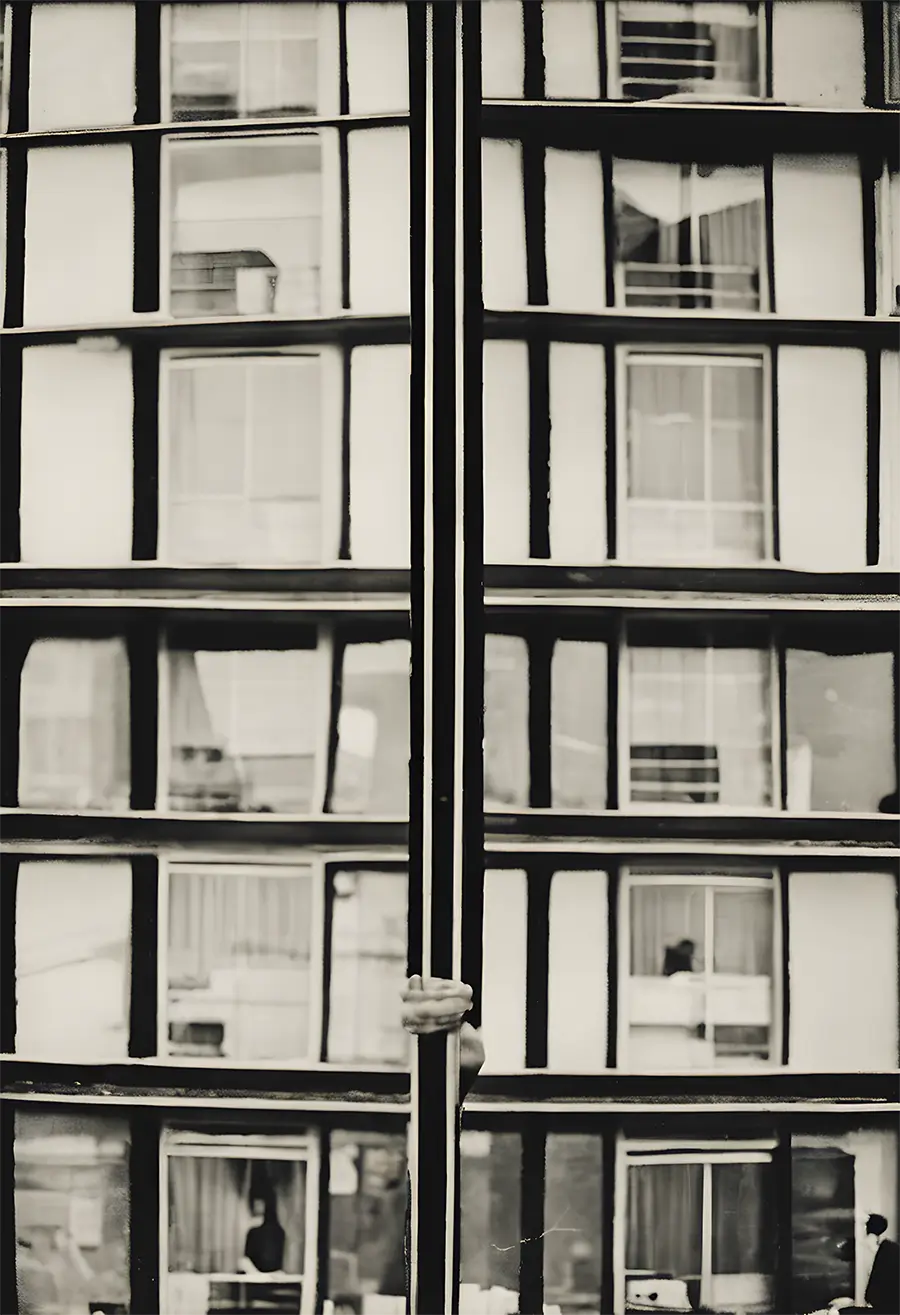
The Double: Image Generated by Caballero's Poem.
Collage: The Double

‘I do not know which of us has written this page.’

Jorge Luis Borges

No additional words or punctuation marks were used other than Borges and Guerrero’s, di Giovanni’s and her own. The image-generation was guided solely by these raw text inputs and via parametrization, thus each output represents a literal, visual translation of the texts.
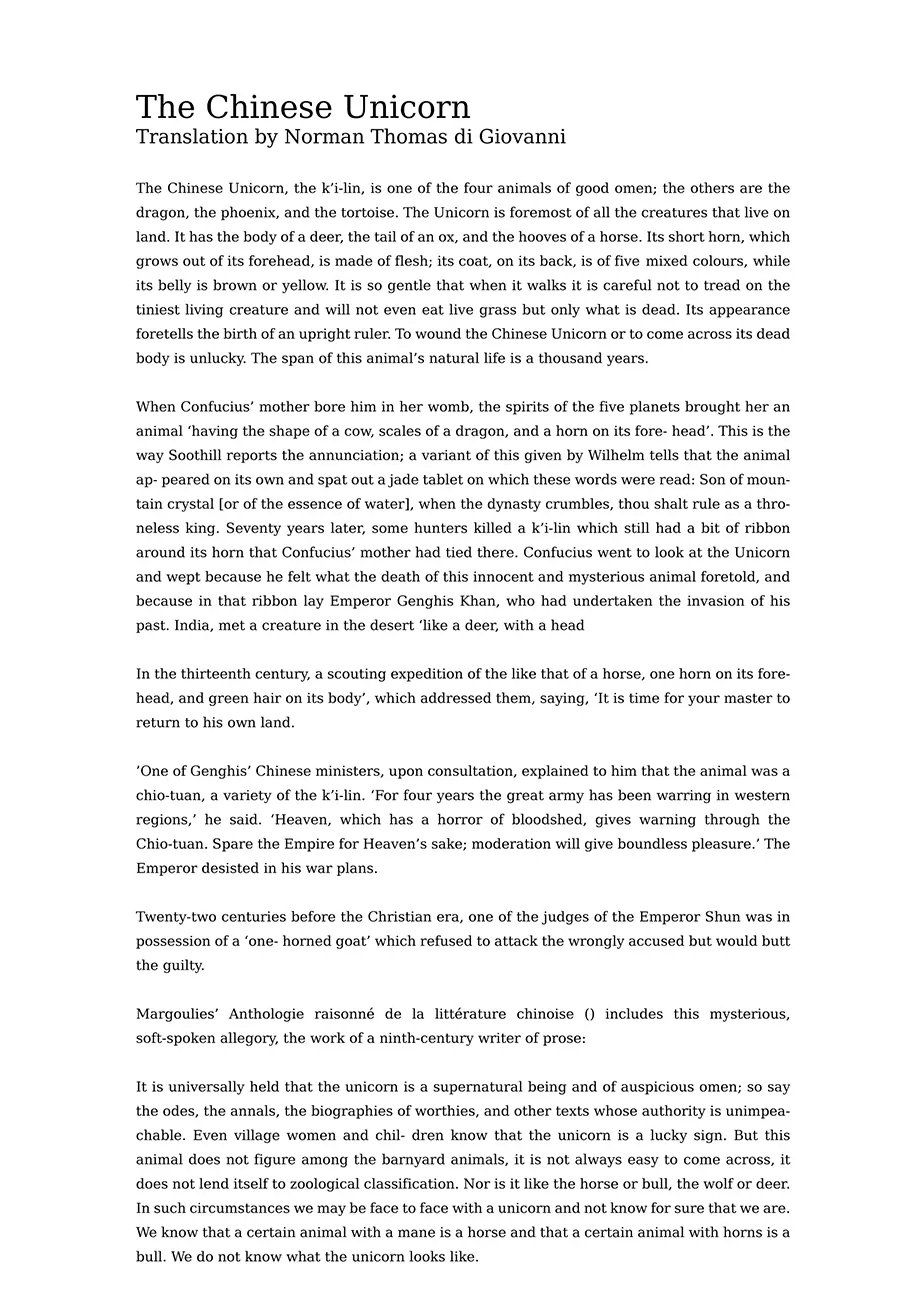
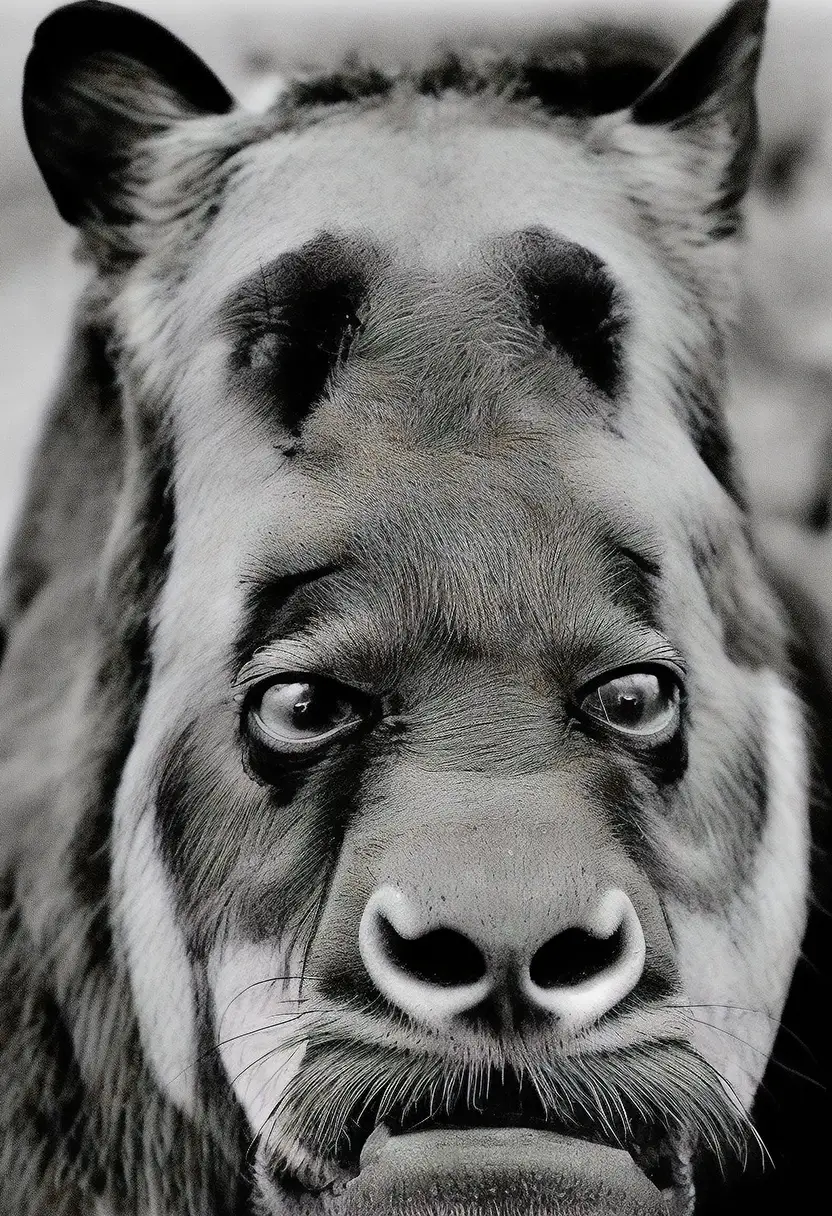
The Chinese Unicorn

The Chinese Unicorn: Original Spanish Text by Borges + Guerrero. Reference only.
The Chinese Unicorn: 1970 Translation by Norman Thomas di Giovanni. Reference only.
The Chinese Unicorn: Poem by Caballero inspired by the original Spanish text.
The Chinese Unicorn: Image Generated by Borges + Guerrero's Spanish Text.
The Chinese Unicorn: Image Generated by di Giovanni's English Translation.
The Chinese Unicorn: Image Generated by Caballero's Poem.
Collage: The Chinese Unicorn.

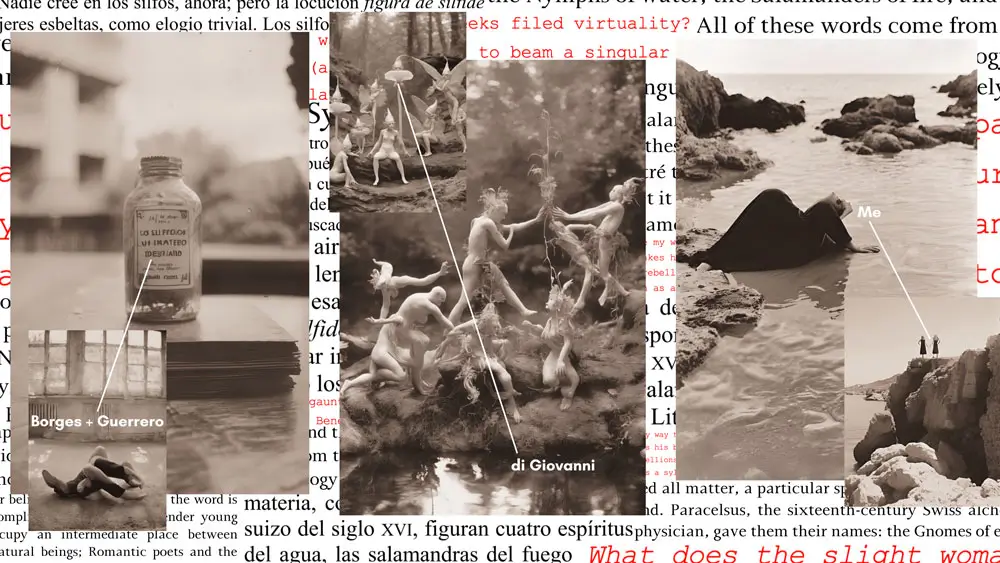
Each Being is brought to life via a collage that brings together Borges and Guerrero’s descriptions of the imaginary beings, di Giovanni’s translations and Caballero’s poems into a triangulation of shared signification and of striking contrast.

Each of Caballero’s original poems is offered as a single edition, signed print.

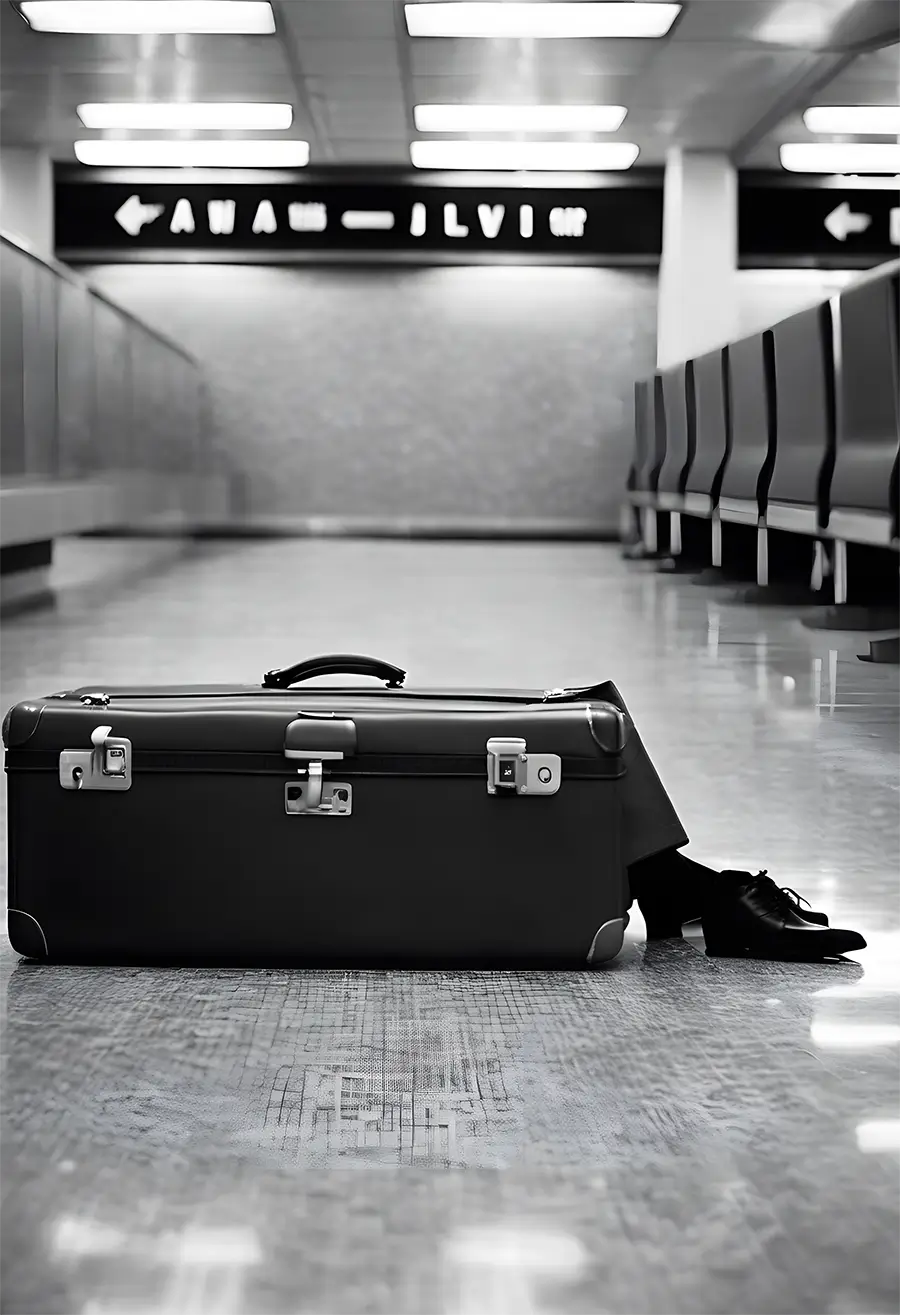
The Hundred-Heads​

The Hundred-Heads​​: Original Spanish Text by Borges + Guerrero. Reference only.
The Hundred-Heads​​: 1970 Translation by Norman Thomas di Giovanni. Reference only.
The Hundred-Heads: Poem by Caballero inspired by the original Spanish text.
The Hundred-Heads​​: Image Generated by Borges + Guerrero's Spanish Text.
The Hundred-Heads​​: Image Generated by di Giovanni's English Translation.
The Hundred-Heads​​: Image Generated by Caballero's Poem.
Collage: The Hundred-Heads.
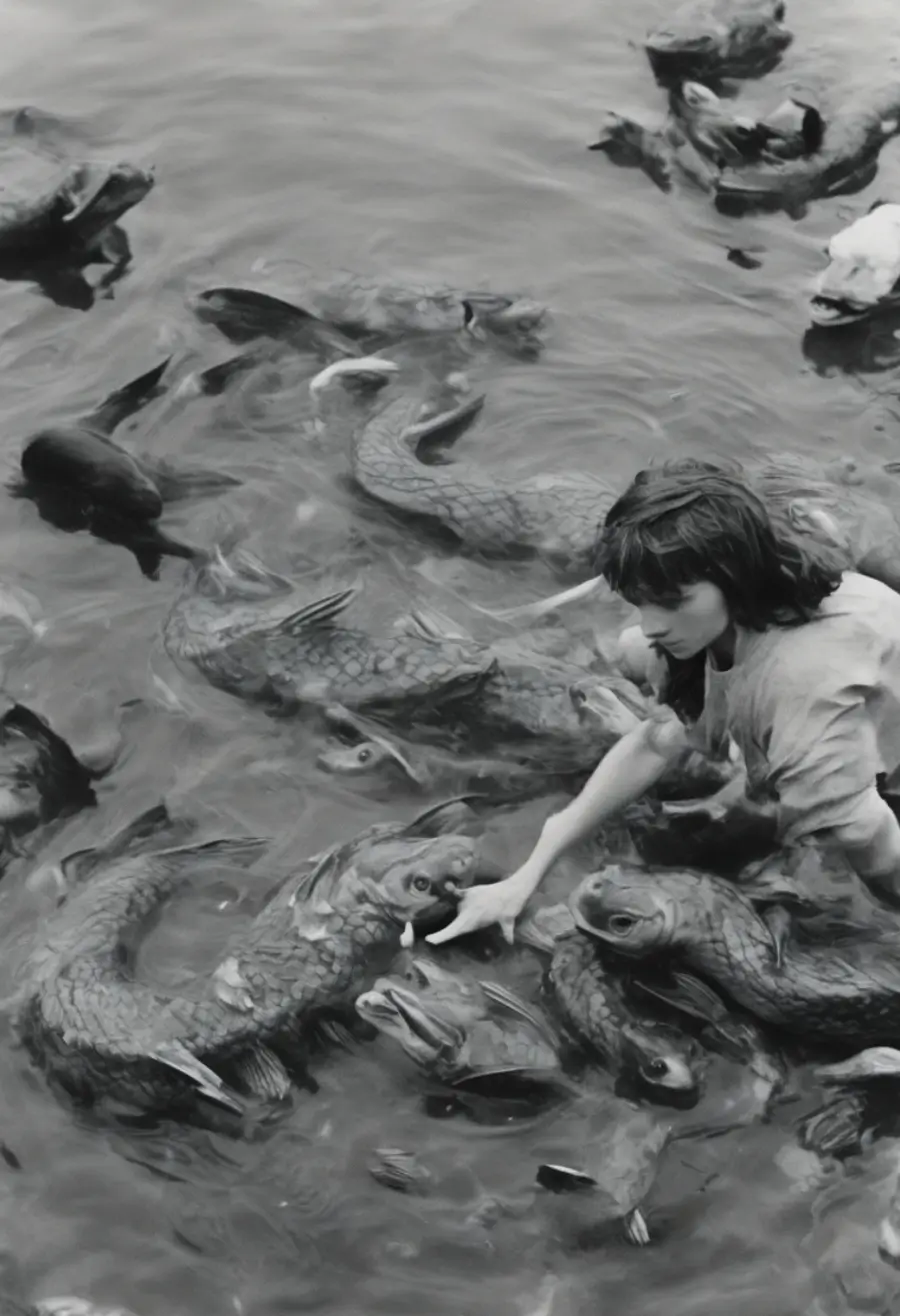
Sophie Calle’s Suite Vénitienne, via which Calle attempts to describes a subject by documenting her efforts to approach him, inspired Caballero to access the core myths in Borges and Guerrero’s book through multiple texts, seeking to humanize the fantastical by mapping these stories as analog, documentary-style photographs rather than painted, digitized or otherwise imagined forms. The interplay of text and image in Being Borges pays homage to Calle’s work.
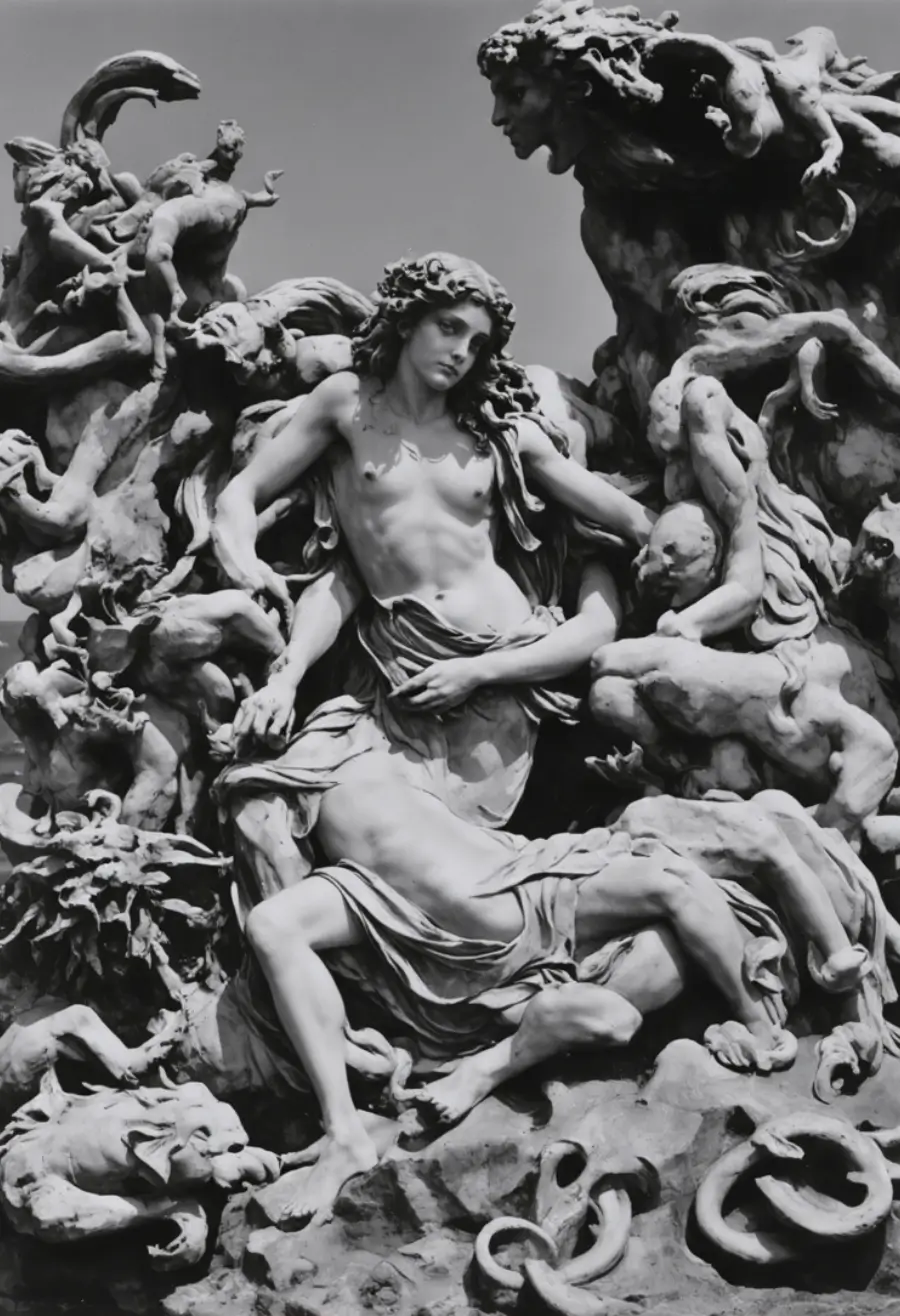
Being Borges invites viewers to experience language as a transdisciplinary work of art, one that expresses meaning beyond its systems of signification.

T’ao T’ieh

T’ao T’ieh​​: Original Spanish Text by Borges + Guerrero. Reference only.
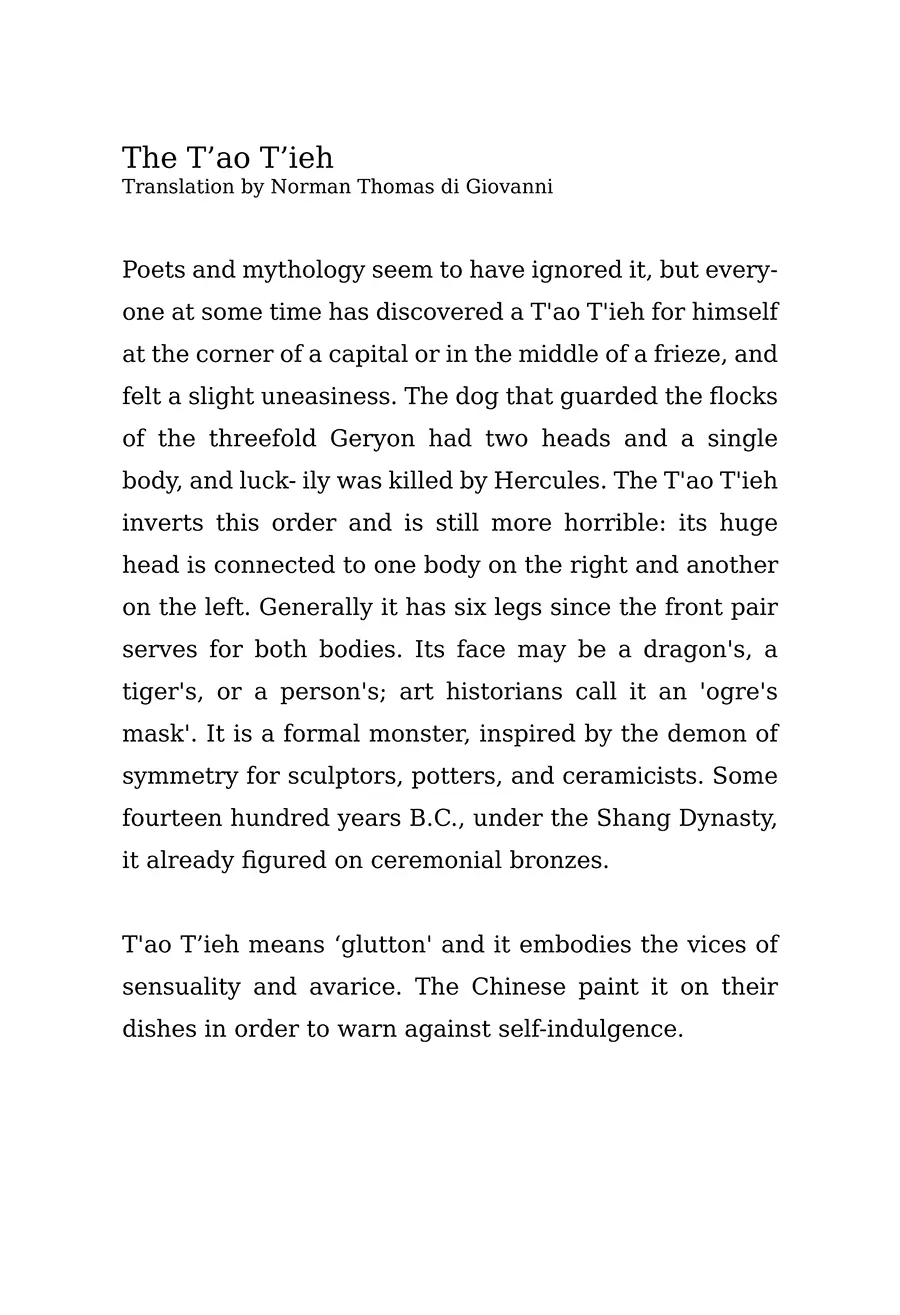
T’ao T’ieh​​: 1970 Translation by Norman Thomas di Giovanni. Reference only.
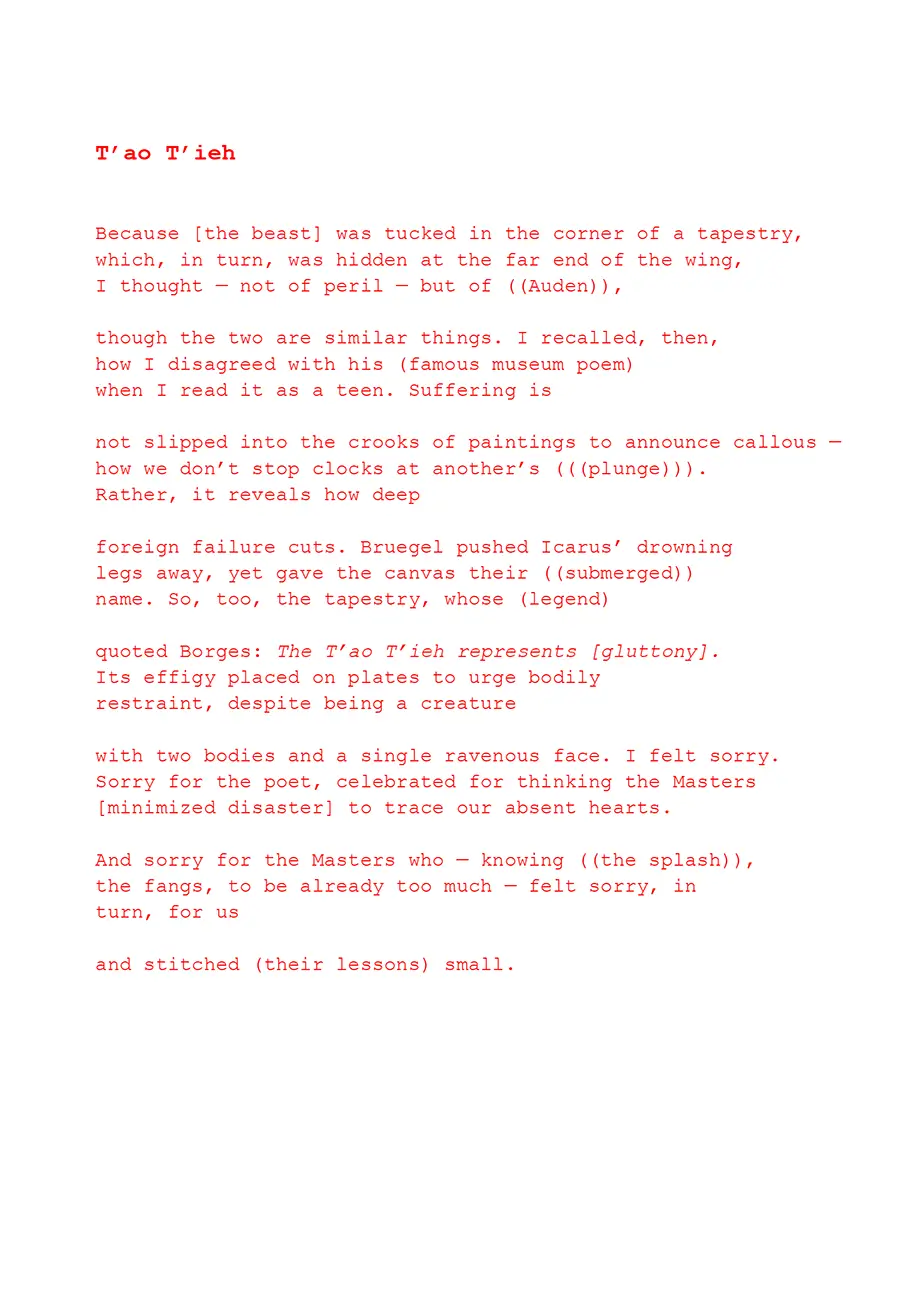
T’ao T’ieh: Poem by Caballero inspired by the original Spanish text.
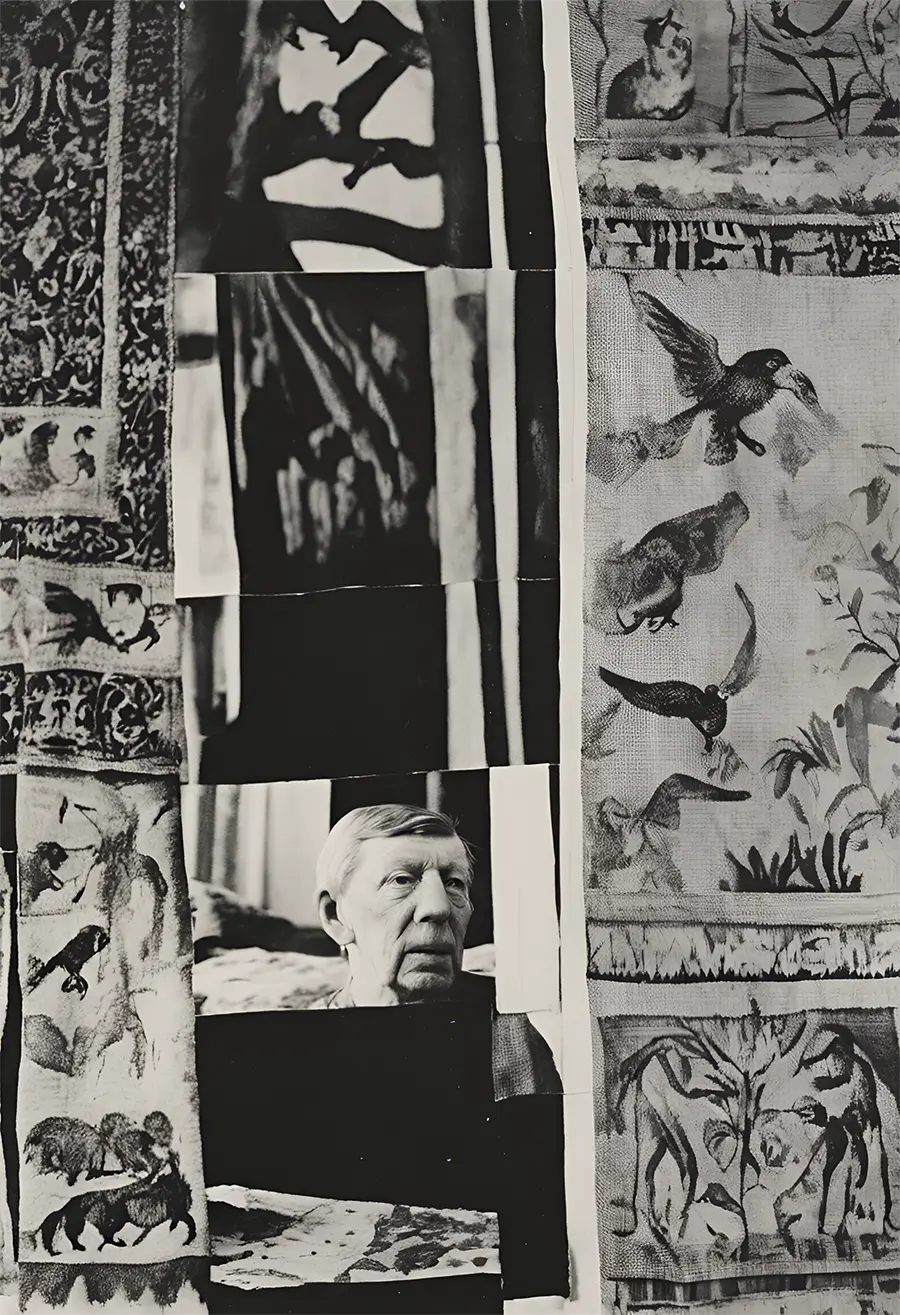
T’ao T’ieh​​: Image Generated by Borges + Guerrero's Spanish Text.
T’ao T’ieh​​: Image Generated by di Giovanni's English Translation.
T’ao T’ieh​​: Image Generated by Caballero's Poem.
Collage: T’ao T’ieh.

The Tension between Translation and Interpretation in Ana María Caballero’s “Being Borges”

By Virginia Valenzuela

What happens to an artwork once the artist whispers its existence into the world? The artist’s intentions, though primal to the work, disappear, and it is but the viewer’s reaction that defines its meaning. The same thing can be said of any thoughts we are brave enough to translate into the spoken or written word. The listener, or reader, decodes our meaning. The original is at the mercy of the interpreter, just as the interpreter is at the mercy of the skill and precision used to create the original.

⁠Introduction to Being Borges with Office Impart and Verse.

Opening of Being Borges as part of the Close Reading exhibition, Office Impart, January 2024, Berlin.

Reading from the Being Borges series at Paris Photo, Office Impart Booth, 2024.

related press: